The two imperial cities are linked by train, coach, private driver and desert tour. Which to choose depends on whether you want speed, comfort, or the Sahara in between.
Marrakech and Fez are the two anchors of a classic Morocco loop, and getting between them is one of the trip's defining logistical choices — not because it is hard, but because the option you pick reshapes the itinerary. You can take the direct train, a coach, a private driver, or fold the journey into a multi-day desert tour that turns the transfer into the highlight of the trip. Here is every option and when each makes sense.
The train: the standard choice
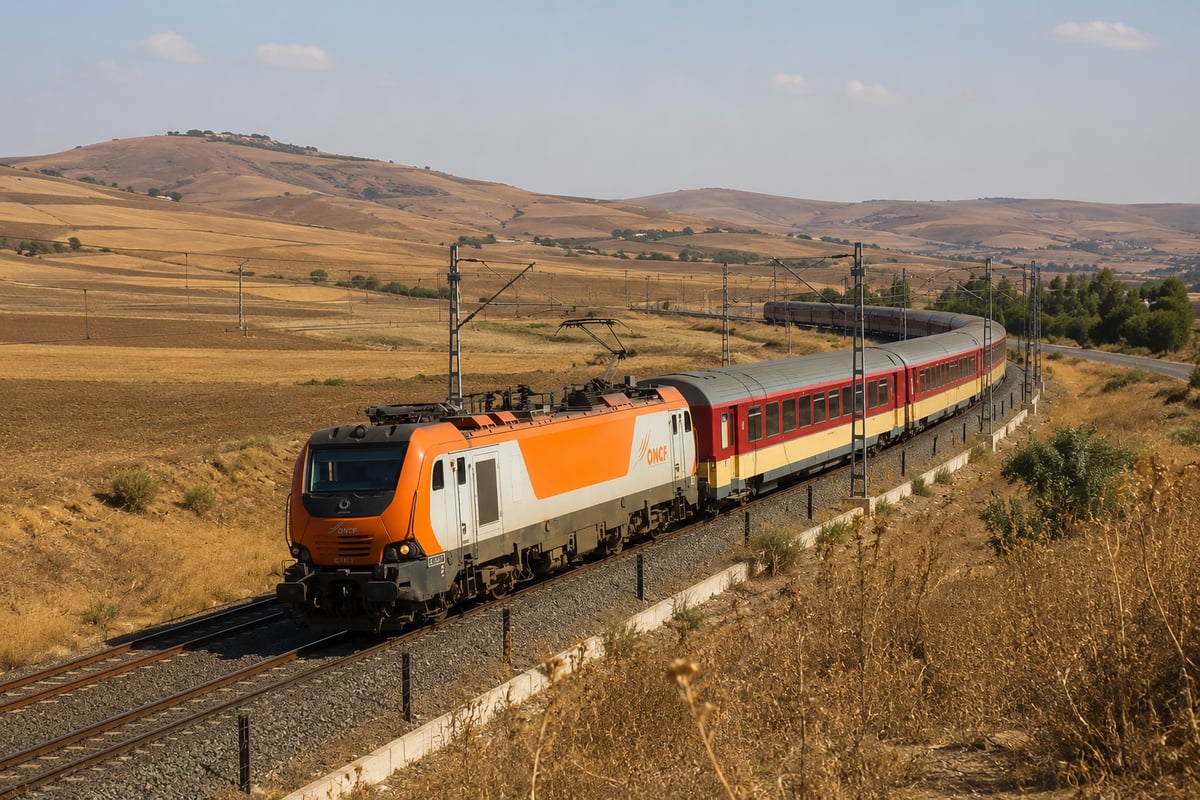
The ONCF train is the default way between Marrakech and Fez, a comfortable ride of roughly seven to eight hours, usually with a change at Casablanca, and it is the option most independent first-timers take. First class buys a reserved seat for a small premium — worth it on a journey this length, especially with luggage. It is calm, reliable and lets you read or watch the country pass, and it drops you in the centre of each city.
Why the train usually wins
For a straightforward city-to-city transfer, the train beats the alternatives on comfort and simplicity: no driving, no negotiation, a fixed schedule and a seat you can book. Booking a day ahead in high season secures first class. Unless you specifically want the desert in between or door-to-door service, the train is the sensible default, and the change at Casablanca is simple rather than a hassle.
The coach
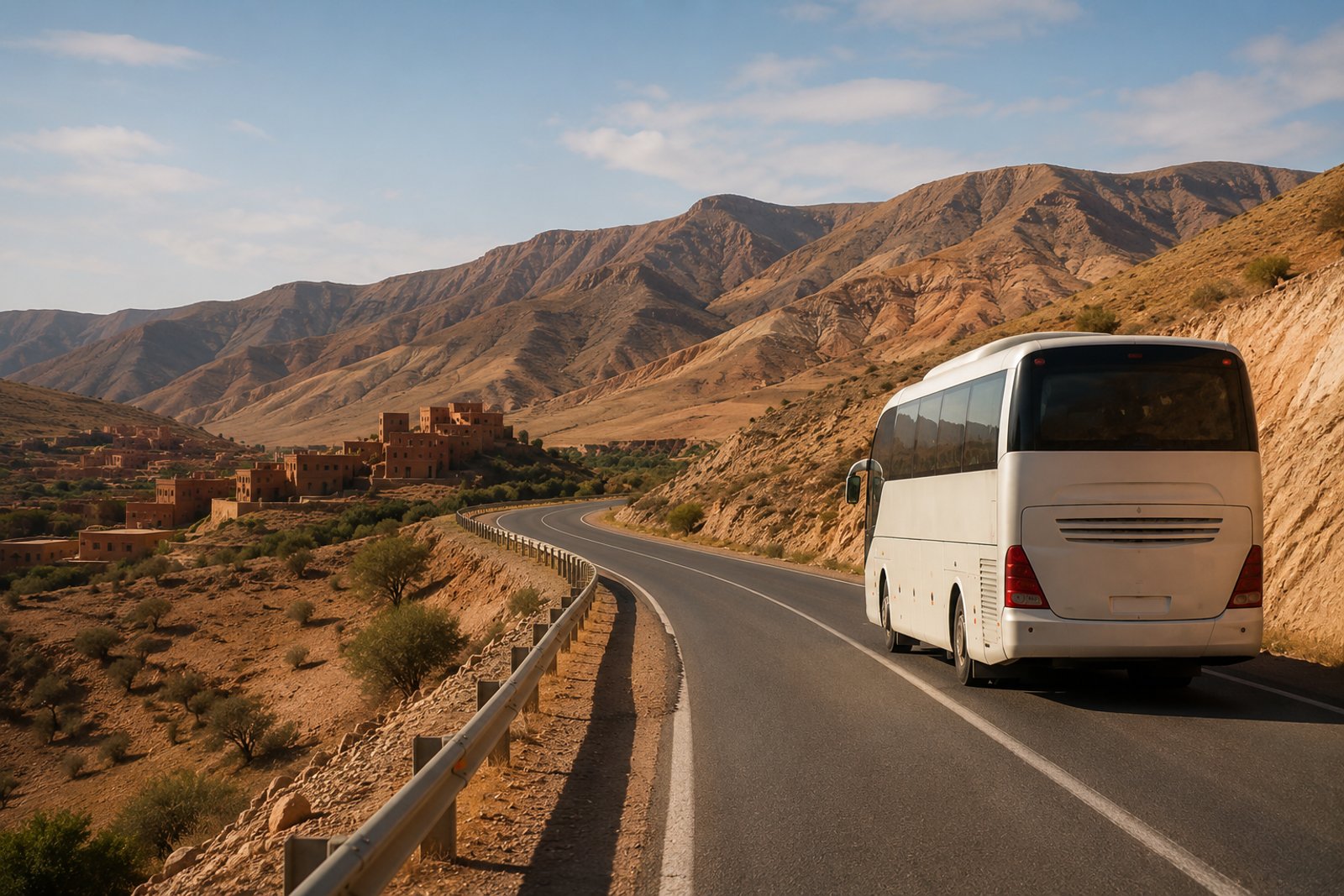
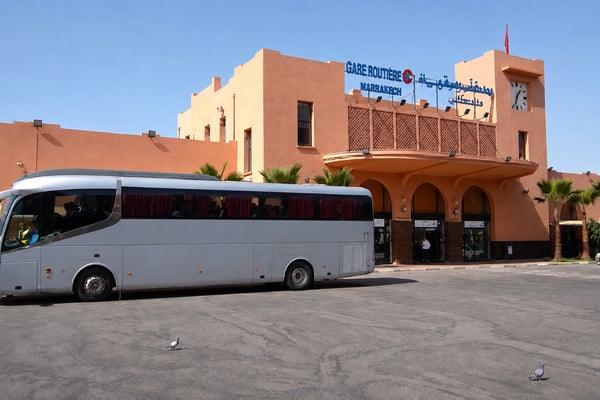
A CTM coach runs the route too, comparable in time to the train and slightly cheaper, and it is a fine alternative if the train schedule does not suit or seats are sold out. It is comfortable and air-conditioned, though it lacks the train's room to move on a long journey. For most travellers the train edges it, but the coach is a solid backup and occasionally the better fit for timing.
The private driver
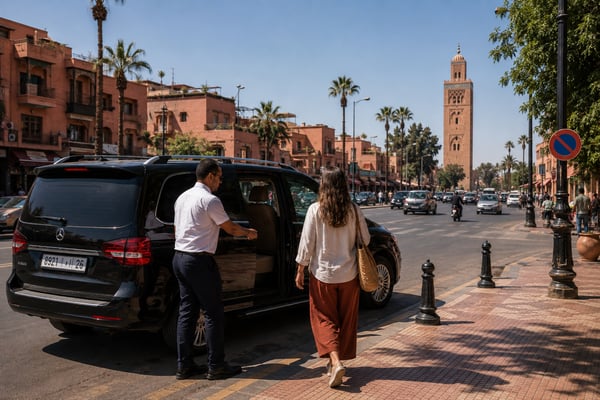
Hiring a private driver for the Marrakech-to-Fez run costs considerably more but buys door-to-door service and the freedom to stop along the way, and it makes most sense if you want to see sights between the cities rather than travel directly. A driver can route you past Beni Mellal or through scenery a train skips, turning the transfer into a touring day. For a family or a group, the cost per head narrows and the convenience can justify it.
Flying between them
There are also domestic flights on some city pairs, though for Marrakech to Fez the short flight time is usually outweighed by the airport rigmarole at both ends, and the train often wins door to door once you count check-in and transfers. Flying makes more sense for longer hops — reaching the far south or the coast — than for a route the train covers comfortably in an afternoon. For most first-timers, the direct train remains the better use of the day.
The desert tour route
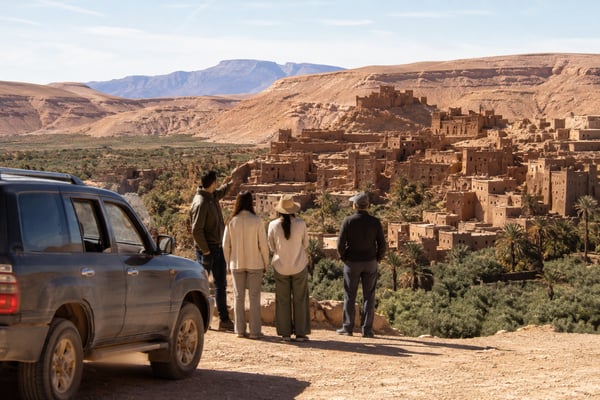
The most rewarding option for many is not a direct transfer at all: a multi-day desert tour that starts in Marrakech and ends in Fez, crossing the High Atlas, Aït Benhaddou, the Dades Valley and the dunes of Merzouga on the way. This turns the journey between the cities into the centerpiece of the whole trip, and it neatly solves the transfer by making it the Sahara leg. If the desert is on your list, ending it in Fez is the elegant way to sequence a loop.
One-way tours solve the logistics
Because these tours run one-way, Marrakech to Fez, they save you doubling back over the long southern drive, and they fold the transport, the guide and the desert night into a single booking. It is the reason so many first-timer loops put the desert in the middle: you are travelling between the cities anyway, so you might as well do it through the Sahara. Confirm the tour ends in Fez when you book.
Whether the Marrakech-Fez leg is a train ride or the desert centerpiece is the single choice that most shapes a first loop's order and pace. How that decision ripples through the trip is worked out in the complete Morocco trip guide.