Moroccan Food: 15 Dishes Every First-Timer Should Try
A first-timer's guide to Moroccan food — the essential dishes to try, from tagine and couscous to pastilla, harira, and street-food snacks, plus what to drink.
Moroccan cuisine is one of the great pleasures of a trip here — fragrant, generous, and built on centuries of Berber, Arab, and Mediterranean influence. For a first-timer, knowing what to order turns every meal into an adventure. Here are the essential dishes and drinks to seek out.
The essential main dishes
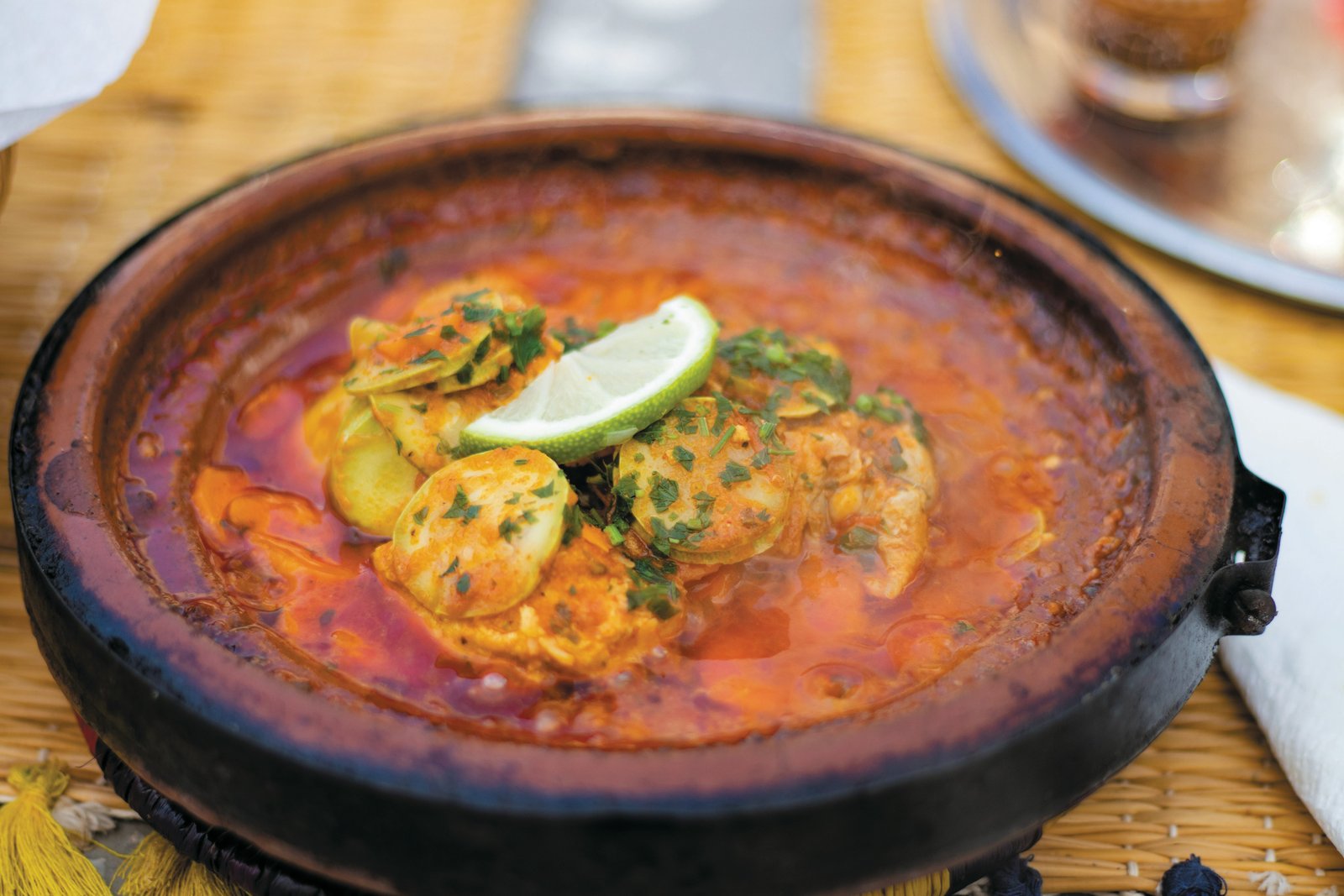
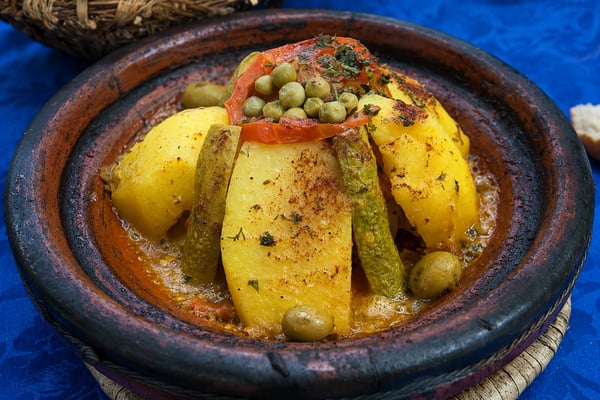
Tagine
The dish you'll eat most — a slow-cooked stew named for the conical clay pot it's made in. Classic versions include chicken with preserved lemon and olives, lamb with prunes and almonds, and kefta (meatball) with egg. Endlessly varied and always comforting.
Couscous
Traditionally the Friday family meal — fluffy steamed semolina topped with vegetables and meat. If you see couscous offered on a Friday, that's the day to order it.
Pastilla (bastilla)
A showstopper, especially in Fez — a sweet-and-savory pie of poultry (traditionally pigeon), almonds, and spices in flaky pastry, dusted with cinnamon and sugar. Unexpected and delicious.
Harira
A hearty tomato, lentil, and chickpea soup, especially popular for breaking the fast during Ramadan but served year-round. Comforting and cheap.
Mechoui
Slow-roasted whole lamb, tender and simple, often found at special stalls and celebrations.
Street food and snacks
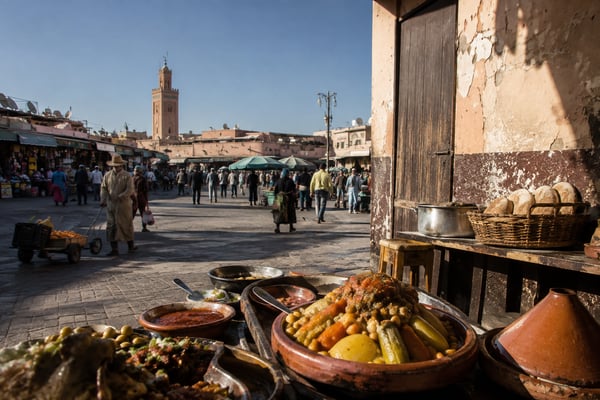
Some of the best eating is on the street. Look for msemen (flaky square griddle pancakes) and beghrir (spongy "thousand-hole" pancakes) at breakfast; sfenj (North African doughnuts); grilled skewers (brochettes); bowls of snails in spiced broth at the markets; and freshly squeezed orange juice from the stalls in Jemaa el-Fnaa. In coastal Essaouira, don't miss the port's grilled fish. A street food guide helps you choose safely — busy stalls with high turnover are the ones to trust.
What to drink
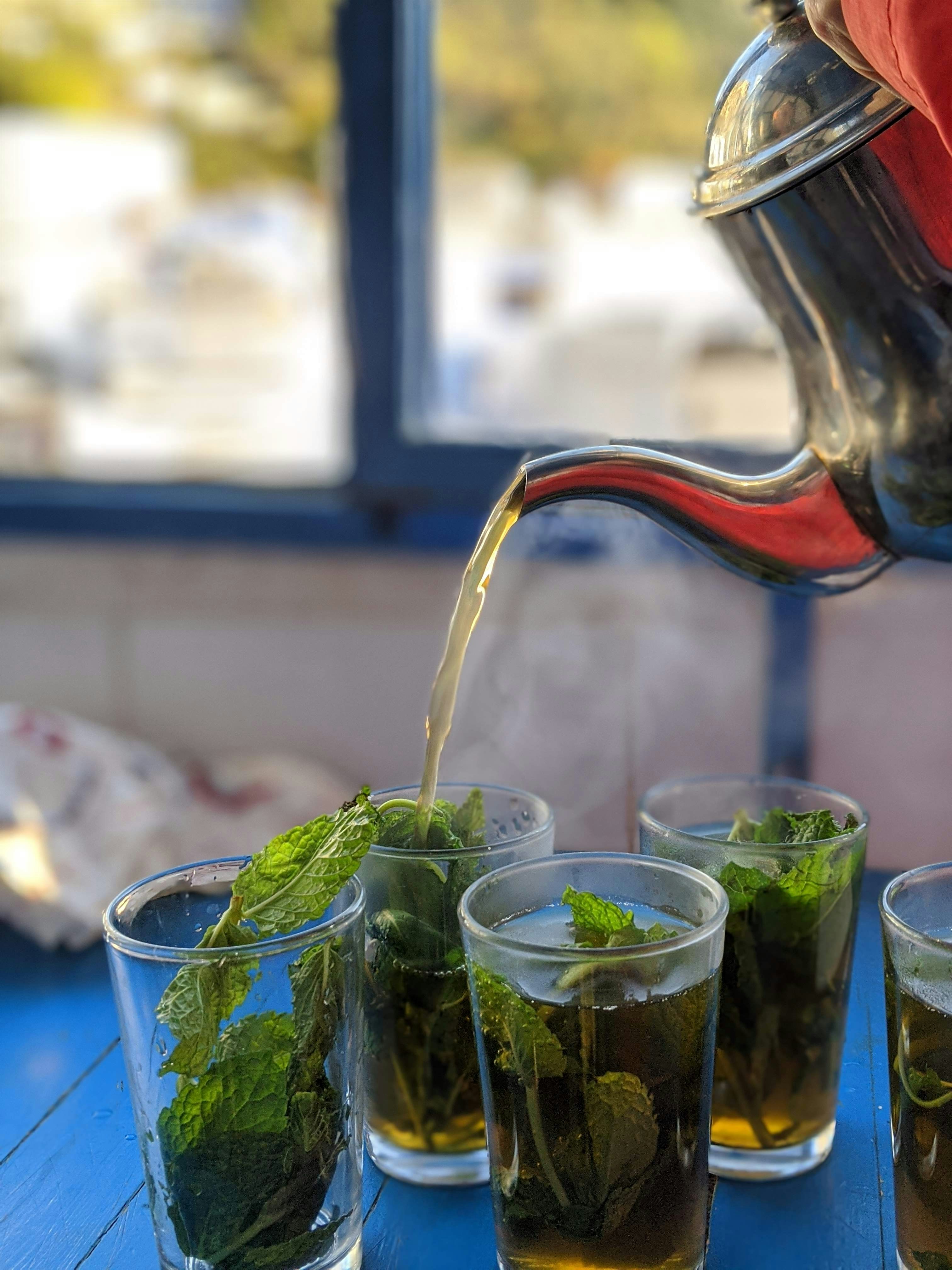
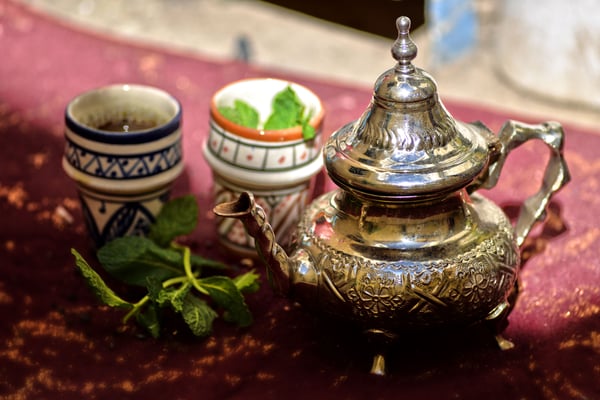
Mint tea
The national drink and a symbol of hospitality — green tea brewed strong with fresh mint and plenty of sugar, poured theatrically from height. You'll be offered it constantly; accepting is part of the culture.
Coffee and juices
Coffee is popular (often as nous-nous, half coffee half milk), and fresh fruit juices are everywhere and cheap. On the question of alcohol — it's available for tourists in licensed hotels, restaurants, and bars, though not consumed openly in public; our alcohol guide explains.
Breakfast, the underrated meal
Moroccan breakfast deserves its own mention because it's a delight and often included at riads. Expect a spread rather than a single plate: an assortment of breads (including msemen and beghrir pancakes) served with honey, olive oil, amlou (an addictive almond-argan-honey spread), jam, and soft cheese, alongside olives, eggs, fresh orange juice, and of course mint tea or coffee. It's a leisurely, generous start to the day and one of the quiet pleasures of staying in a riad. If your accommodation offers it, lingering over a rooftop breakfast in the morning light is a lovely way to begin before the medina wakes up fully.
The Moroccan meal and hospitality
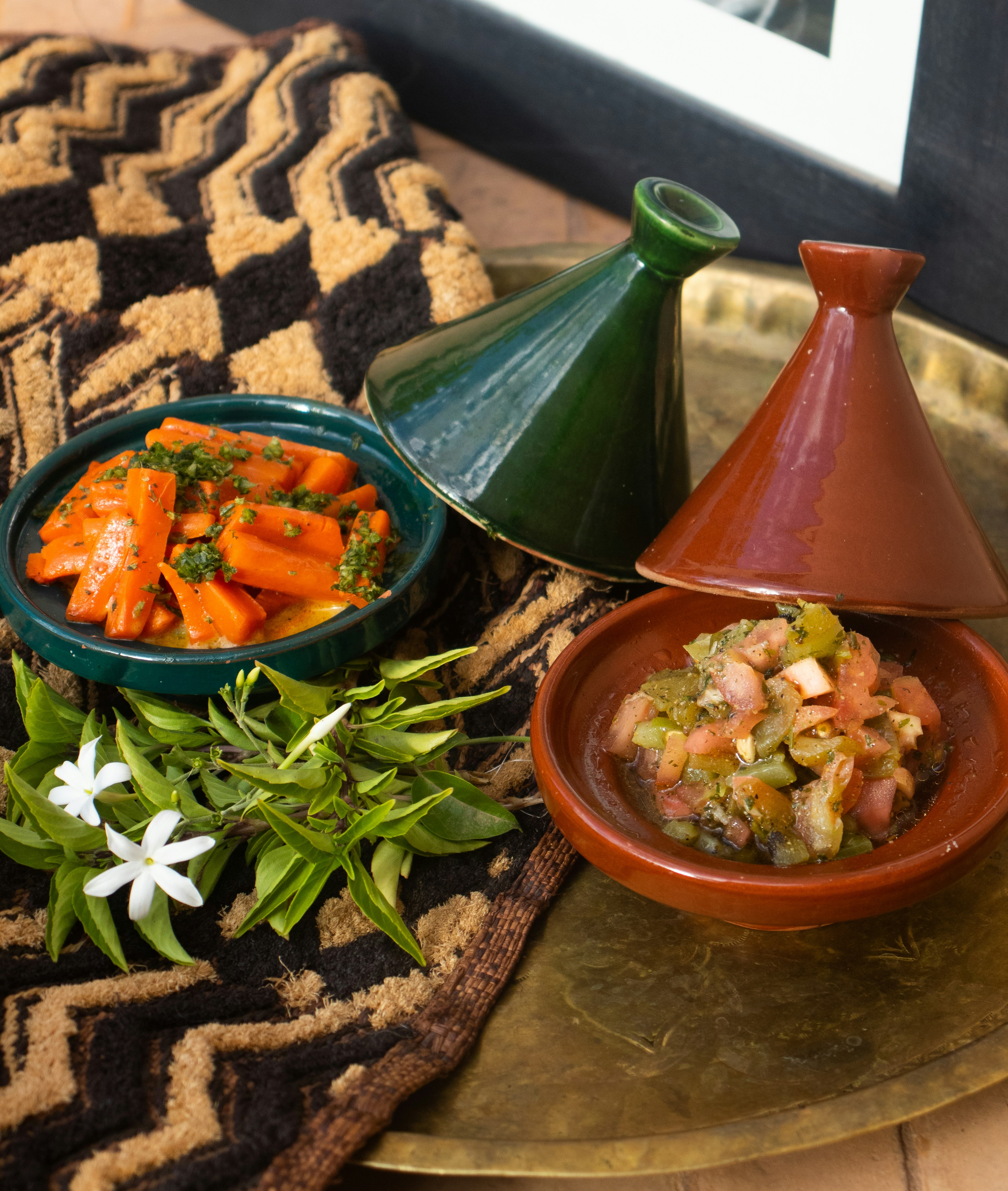
Eating in Morocco is as much about the ritual as the food. Meals often begin with an array of small salads and warm bread, build to a shared central dish everyone eats from — traditionally with the right hand and a piece of bread as your utensil — and end with fruit, sweets, and tea. Hospitality is central: if you're invited into a home, expect to be fed generously and repeatedly, and refusing outright can cause offense, so pace yourself and accept graciously. Bread (khobz) is sacred and appears at every meal, used to scoop and mop. Understanding this rhythm helps you relax into meals rather than rush them, which is exactly how they're meant to be enjoyed.
Sweets and pastries
Save room for Moroccan sweets: chebakia (sesame, honey-soaked flower-shaped cookies), briouat (sweet stuffed pastries), gazelle horns (kaab el ghazal, almond-filled crescents), and endless date and nut confections, all lovely with mint tea. They're a fixture of hospitality and celebration.
Tips for eating well
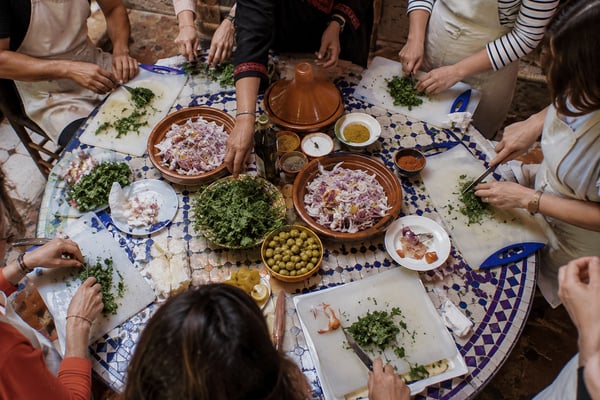
A few pointers: eat where locals eat for the best and cheapest food; use your right hand for eating, especially from shared dishes; and consider a cooking class or food tour early in your trip to learn the dishes and shop the souk with a guide — one of the most rewarding activities in the country. Stick to bottled water, and give your stomach a day to adjust before going all-in on street food. Above all, come hungry and curious — Moroccan food is a highlight in its own right.
A note on food safety
Most visitors eat wonderfully in Morocco without any trouble, but a little care prevents the common traveler's stomach. Drink bottled or filtered water and avoid ice from uncertain sources, especially early in your trip. Choose busy stalls and restaurants with high turnover, where food is fresh and constantly cooking. Fruit you can peel yourself is a safe bet. Give your system a day or two to adjust before diving into the most adventurous street food. And carry a basic stomach remedy just in case. None of this should stop you from eating widely — the food is a highlight — it just tilts the odds firmly in your favor so you can enjoy every tagine and pastry. When in doubt, follow the crowds — a stall packed with locals is both a sign of great food and of high, safe turnover. It's the single most reliable rule of thumb for eating well and safely anywhere in Morocco, from a Marrakech square to a roadside stop on the way to the desert.
Moroccan food FAQ
What is the most famous Moroccan dish?
Tagine — a slow-cooked stew named for its conical clay pot — is the most iconic, followed closely by couscous and, in Fez, pastilla.
Is Moroccan food spicy?
Not usually hot-spicy — it's aromatic and warmly spiced (cumin, cinnamon, saffron, ginger) rather than fiery. The condiment harissa adds heat if you want it.
What should vegetarians eat in Morocco?
Vegetable tagines, couscous, lentil and chickpea dishes, salads, and bread are widely available, though always confirm dishes are meat-free, as some use meat broth.
Is street food safe in Morocco?
Generally yes at busy stalls with high turnover. Stick to bottled water, give your stomach a day to adjust, and choose popular spots over quiet ones.