Mint tea is offered everywhere, and refusing it can feel awkward. What the ritual means, why it's poured from height, and how to navigate it in a shop or a home.
Mint tea is the constant companion of a Moroccan trip: offered in shops, homes, riads and at every pause, it is a gesture of hospitality woven through daily life across North Africa. For a first-timer the ritual can be slightly bewildering — when to accept, whether it obligates you, why it is poured from such a height — and understanding it makes every encounter smoother. Here is what the tea means and how to navigate it gracefully.
What it is
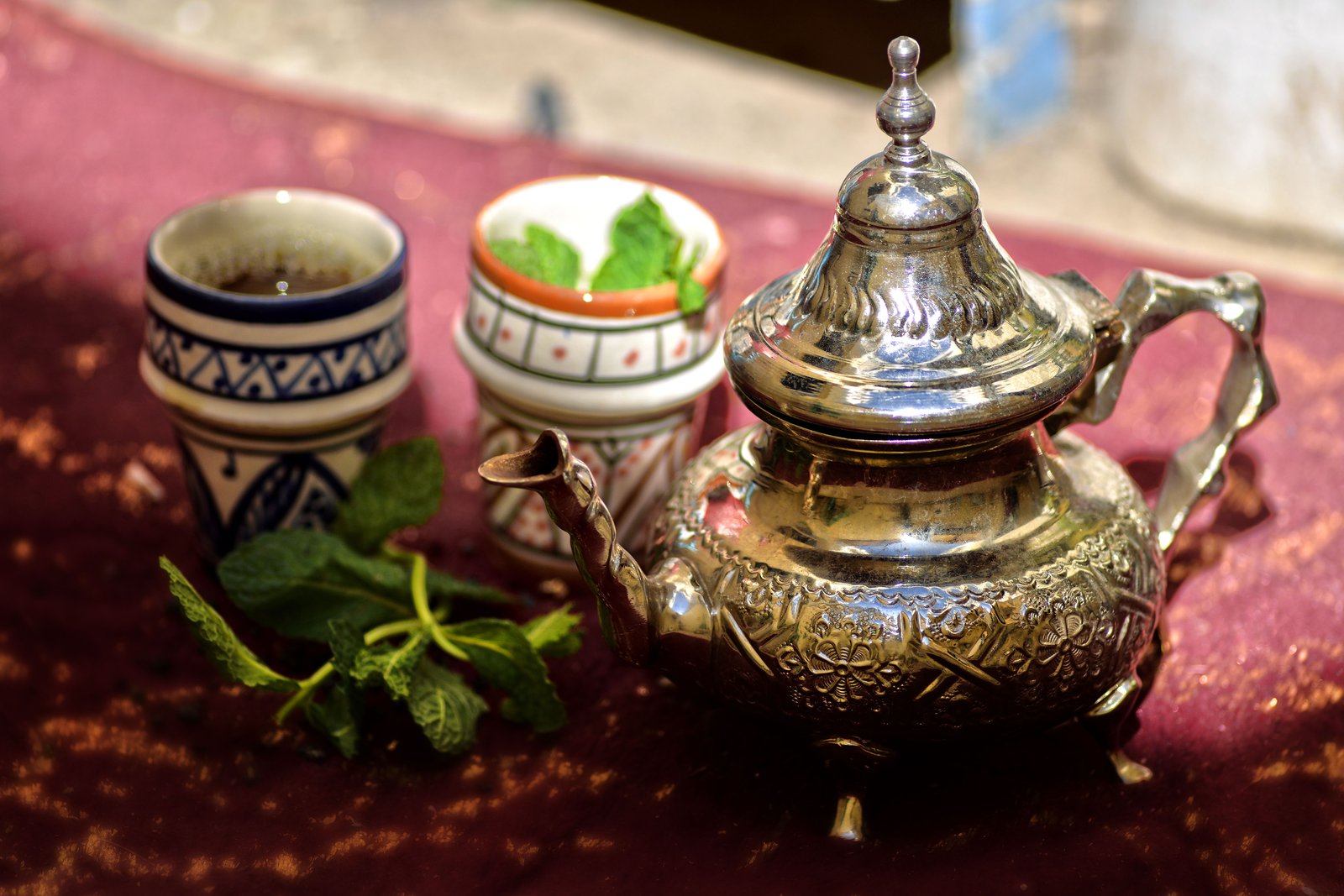
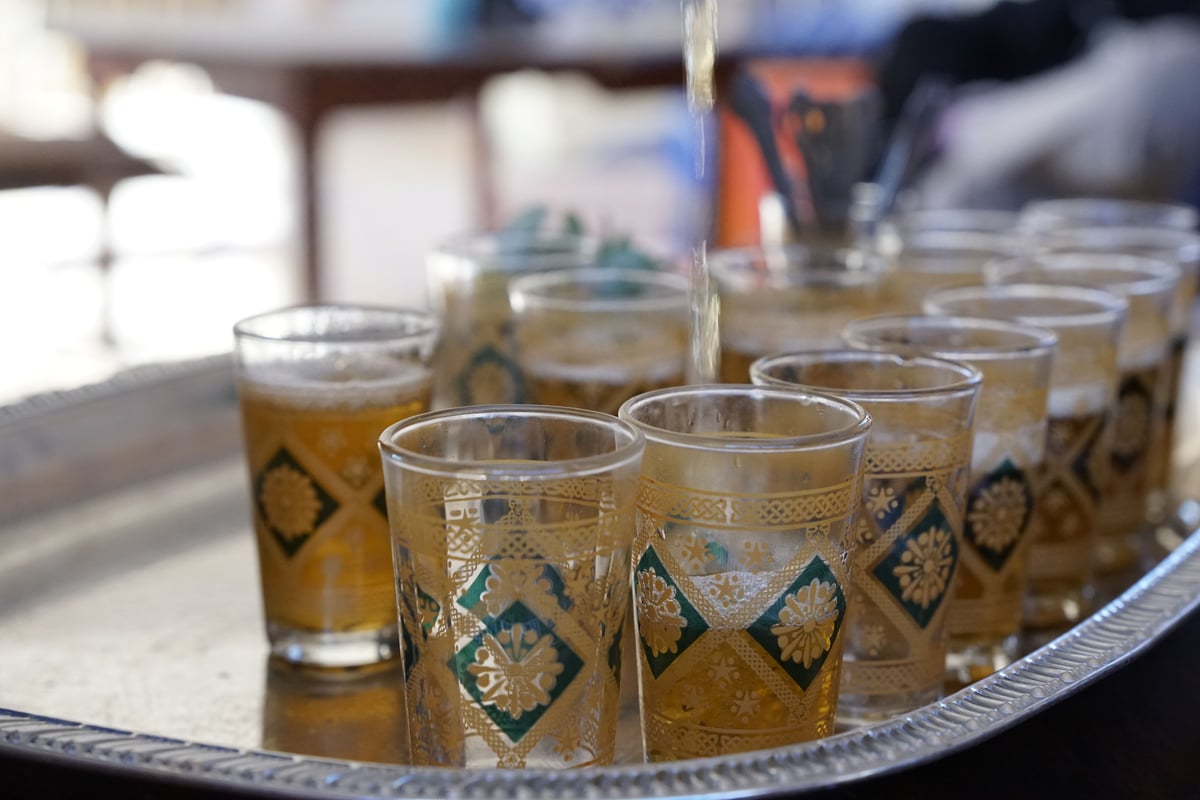
The tea is green tea brewed with fresh spearmint and a generous amount of sugar, served in small glasses rather than cups, and it is drunk throughout the day, not just after meals. Sweet, hot and aromatic, it is central to social life across the Maghreb, and Morocco has its own beloved version. The sugar is traditional and heavy; if you prefer it less sweet, you can ask, though the classic serving is frankly sweet.
The pouring ritual
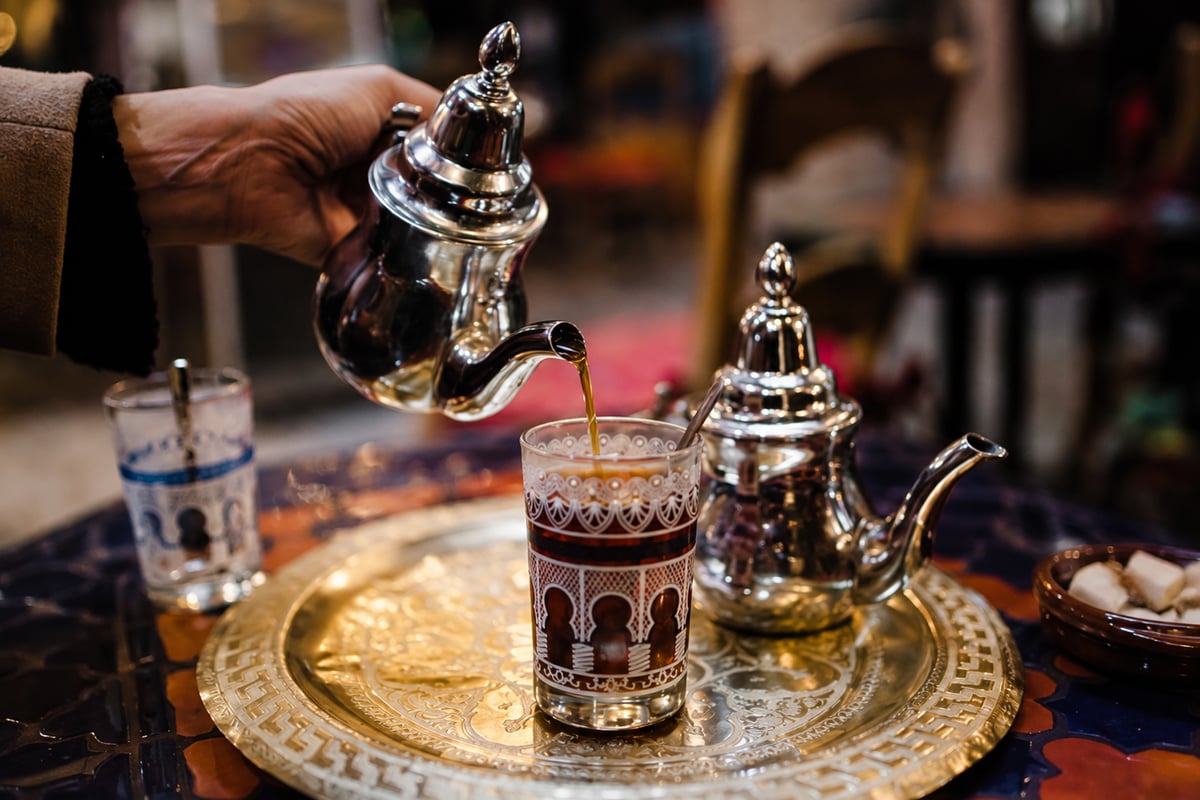
You will notice the tea poured from a height, a long stream from pot to glass, and this is deliberate: it aerates the tea, creates a light foam on top, and is a small performance of hospitality and skill. The host may pour the first glass back into the pot to mix it before serving. Watching the pour is part of the pleasure, and a well-executed one from height is a point of pride for the person serving.
The etiquette of accepting
When tea is offered — in a home, a riad, or a shop — accepting is the gracious response, as it is a genuine gesture of welcome, and sharing a glass is a small act of connection rather than a commitment to anything. In a carpet or craft shop, though, be aware that the tea is also part of the sales ritual: accepting it is fine and does not obligate you to buy, but understand that the hospitality and the sales pitch are intertwined. You can enjoy the tea and still decline the goods.
Can you refuse?
Refusing tea is not catastrophic, but accepting is warmer, and if you genuinely cannot — time, too much sugar already — a polite, appreciative decline is understood. In a home especially, accepting at least a glass honours the hospitality. The tea is offered in a spirit of generosity, and meeting it in the same spirit, even briefly, is the graceful path. A flat refusal can read as cold in a culture where the offer means a great deal.
Tea in the shop, plainly
Because mint tea appears the moment you show interest in a carpet or craft shop, it is worth naming the dynamic: the glass is real hospitality and a softening ritual before the negotiation, both at once. Accept it if you like, enjoy it, and keep a clear head about the separate question of whether and what to buy. The tea creates a warm obligation by design, and knowing that lets you receive the warmth without being moved by the obligation.
Tea beyond the shop
Away from the commerce, the tea is simply lovely: offered by a riad on arrival, poured at the end of a meal, shared on a rooftop as the call to prayer sounds, it punctuates the day with small warm pauses. Cafes serve it all day, and a pot with a plate of pastries is one of the cheapest and most pleasant ways to rest between sights. Learning to enjoy it unhurried is learning something real about the pace of the place.
Making it at home
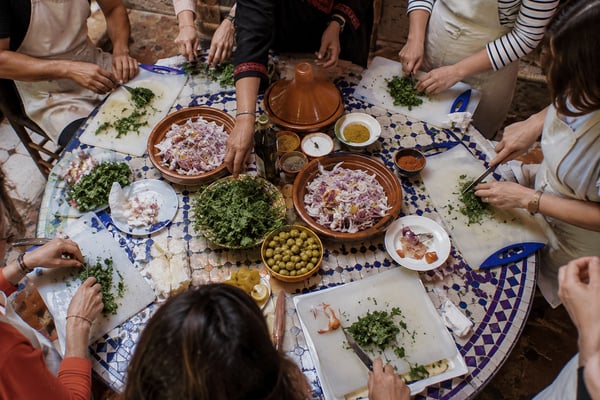
Many travellers take the ritual home, buying a pot, glasses and green tea in the souks to recreate it, and a cooking class often teaches the proper method — the brewing, the sugar, the pour from height. It is an inexpensive, evocative souvenir that carries the trip into your kitchen. If you want to buy the kit, the souks have every grade of teapot and glass, and bargaining applies as it does to any craft purchase.
Making it part of the trip
The best approach is to lean into the ritual: accept the tea when it is offered in good faith, learn to enjoy its sweetness, and treat each glass as the small human moment it is meant to be. It is one of the genuine warmths of travelling in Morocco, and the pauses over tea — on a rooftop, in a shop, in someone's home — are often what travellers remember most fondly. Just keep the shop version's dual nature in mind.
The tea ritual is inseparable from the shop encounter and the wider hospitality that shapes every interaction, and how that warmth and the commerce beneath it fit together is worked out in the complete Morocco trip guide.
Green tea brewed with fresh spearmint and plenty of sugar, served hot in small glasses throughout the day — a gesture of hospitality across North Africa.
Why is it poured from height?
To aerate the tea and create a light foam on top — a small performance of hospitality and skill.
Does accepting tea in a shop obligate me to buy?
No. The tea is real hospitality and part of the sales ritual at once. Enjoy it, and decide separately whether to buy.
Can I refuse the tea?
Yes, politely — but accepting is warmer, especially in a home, where it honours the hospitality. A flat refusal can read as cold.
Can I ask for less sugar?
You can, though the classic serving is frankly sweet. The heavy sugar is traditional.