What to wear in Morocco as a woman: modest but comfortable, layered for the range of climates, and practical for medinas and the desert. A complete list.
Packing for Morocco as a woman comes down to two principles: dress modestly out of cultural respect, and pack in layers for a country that spans hot cities, cold desert nights and mountain chills. Neither means sacrificing comfort or style — loose, breathable, covering clothing is both respectful and practical in the heat. Here is a complete, sensible packing list and the reasoning behind it, so you arrive comfortable and appropriately dressed.
The modesty principle
Morocco is a Muslim country where modest dress is the respectful norm, so aim to cover shoulders, chest and knees, favouring loose fits over tight ones — this is about respect and comfort, not a strict requirement, and you will see a range on other visitors. Covering up also protects you from the fierce sun and reduces unwanted attention. You need not cover your hair in daily life (a scarf is useful for mosques' courtyards and the sun), but loose, covering clothing genuinely makes travel here easier and more comfortable.
Clothing: loose, breathable, layered
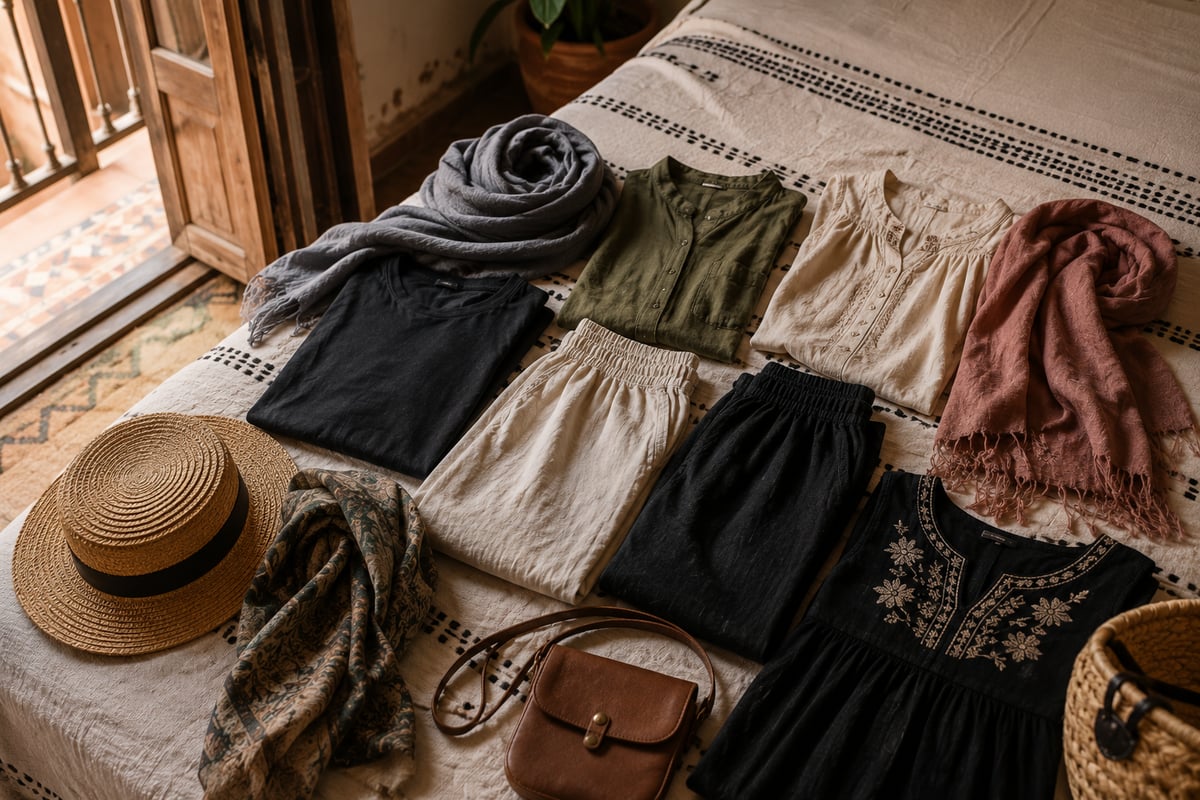
The core wardrobe is loose trousers, long skirts or maxi dresses, and tops that cover the shoulders in breathable fabrics like cotton and linen — cool in the heat while still covering. Pack layers you can add and remove, because a hot city afternoon becomes a cold desert or mountain evening within the same trip. A light cardigan or long-sleeved layer does double duty for sun, chill and modesty. Choose flowing over fitted and you will be comfortable in every setting.
The versatile scarf
A large scarf is the single most useful item to pack: it covers your hair where you want to, wraps against the desert chill and the sand, shields your neck from the sun, and adds a layer in cold mosque courtyards or evenings. One or two good scarves earn their place many times over across a trip. It is the one accessory that solves modesty, warmth, sun and style in a single lightweight piece.
Footwear and the practical layer
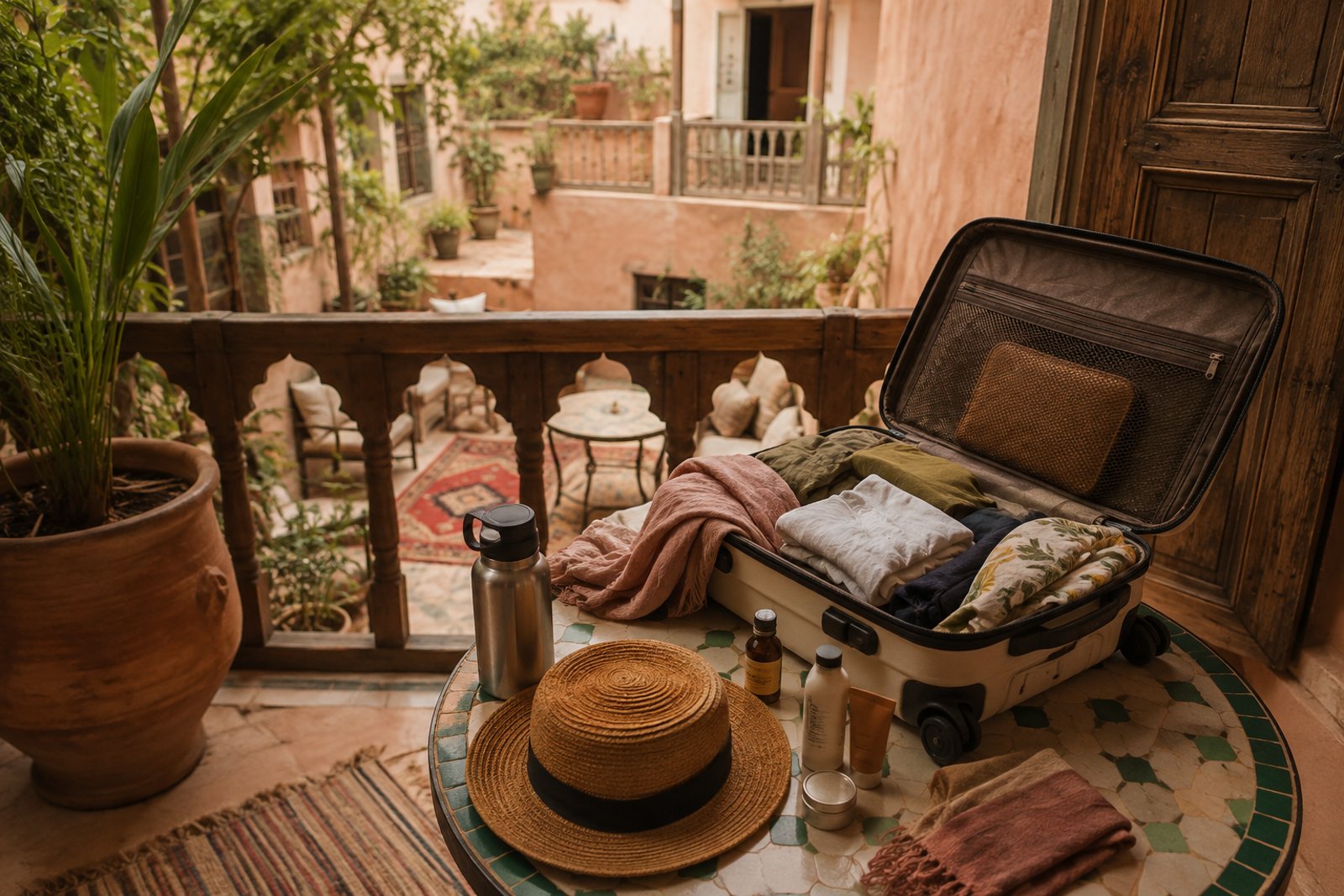
Comfortable, closed, broken-in walking shoes are essential for the uneven medina lanes and cobbles, with sandals for hot days and relaxed evenings — leave the heels at home, as the streets defeat them. Add sun protection (hat, sunglasses, high-SPF sunscreen), a reusable water bottle, and a crossbody bag that zips closed for the crowded souks. These practical items matter as much as the clothing for a comfortable, hassle-free trip through Morocco's varied terrain.
Desert and mountain additions
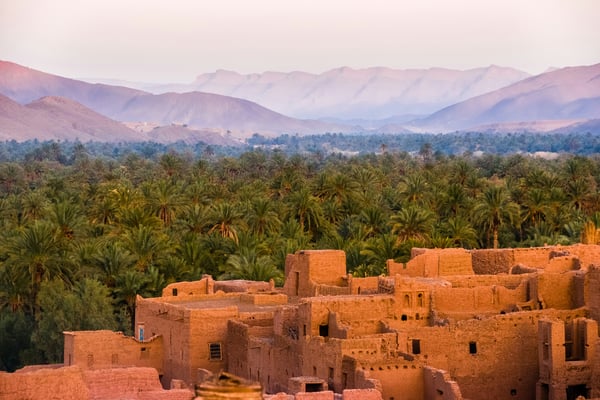
If your trip includes the Sahara or the Atlas, add genuinely warm layers — a fleece and a jacket — because desert nights are cold to freezing and mountains cooler still, regardless of how hot the cities were. A warm hat and the scarf handle the night chill and the blowing sand. Travelers consistently under-pack for the desert cold, expecting the daytime warmth to hold; it does not, and the star-filled night is far better enjoyed warm than shivering.
What not to bring
Just as useful as the packing list is what to leave home: skip revealing or very tight clothing that draws attention and reads as disrespectful, high heels that the medina cobbles will defeat, excessive jewellery, and single-voltage appliances that will not work on Morocco's system. Travelers routinely over-pack clothing and under-pack layers; resist the urge to bring options for every conceivable outfit and instead bring versatile, mix-and-match pieces. A lighter, smarter bag is easier through the medinas and the transfers than an overstuffed one.
The complete quick list
In short: loose trousers, long skirts or dresses, shoulder-covering tops, a cardigan or light jacket, one or two large scarves, comfortable walking shoes, sandals, sun protection, a zip crossbody bag, a reusable water bottle, and warm layers for the desert and mountains. Add your toiletries, any medications from home, and adapters, and you are set for every setting Morocco presents — modest, comfortable, and ready for the full range of its climates.
Packing well is part of the practical groundwork that lets you move comfortably through the whole range of the trip, from medina to desert. How the practical layer fits the rest of the plan is worked out in the complete Morocco trip guide.
Modest, loose, breathable clothing covering shoulders, chest and knees — respectful, cooler in the heat, and it reduces unwanted attention. Style isn't sacrificed.
Do I need to cover my hair?
Not in daily life. A scarf is useful for mosque courtyards, the sun and the desert chill, but head-covering isn't expected of visitors day to day.
What's the most useful thing to pack?
A large scarf — it covers hair, wraps against desert chill and sand, shields from sun, and adds a layer. One or two earn their place many times over.
What shoes should I bring?
Comfortable, closed, broken-in walking shoes for the uneven medinas, plus sandals for hot days. Leave heels at home.
What do I add for the desert?
Genuinely warm layers — a fleece, jacket, warm hat — since desert nights are cold to freezing. Travelers routinely under-pack for this.