Morocco runs on European-style electricity, which means US travelers need the right adapter and, for some devices, a voltage converter — a small detail that is easy to sort before you fly and annoying to discover on arrival. Getting your charging setup right keeps phones, cameras and the rest powered through long days of sightseeing and remote desert nights. Here is exactly what Morocco uses and what to bring.
Plugs and voltage
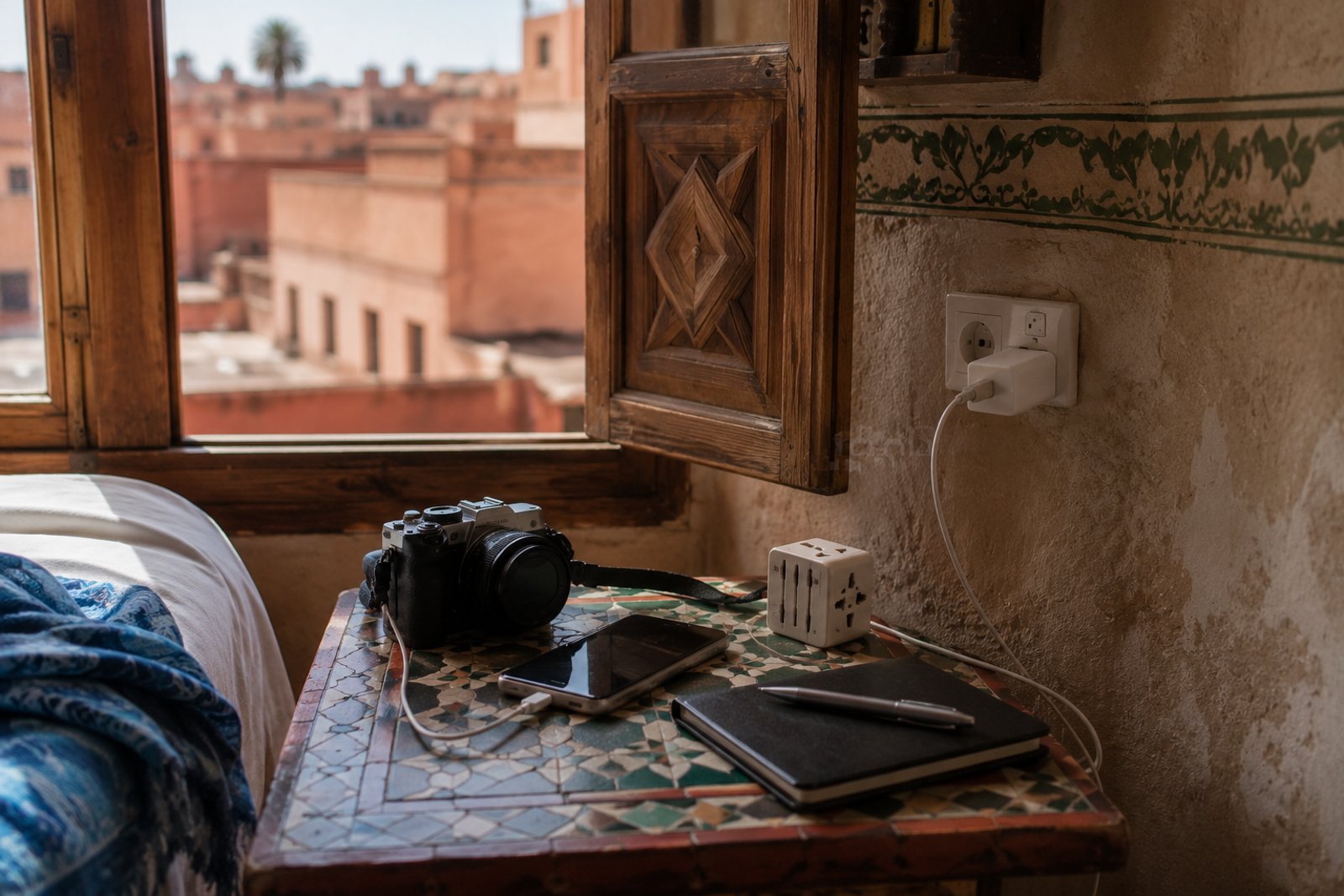
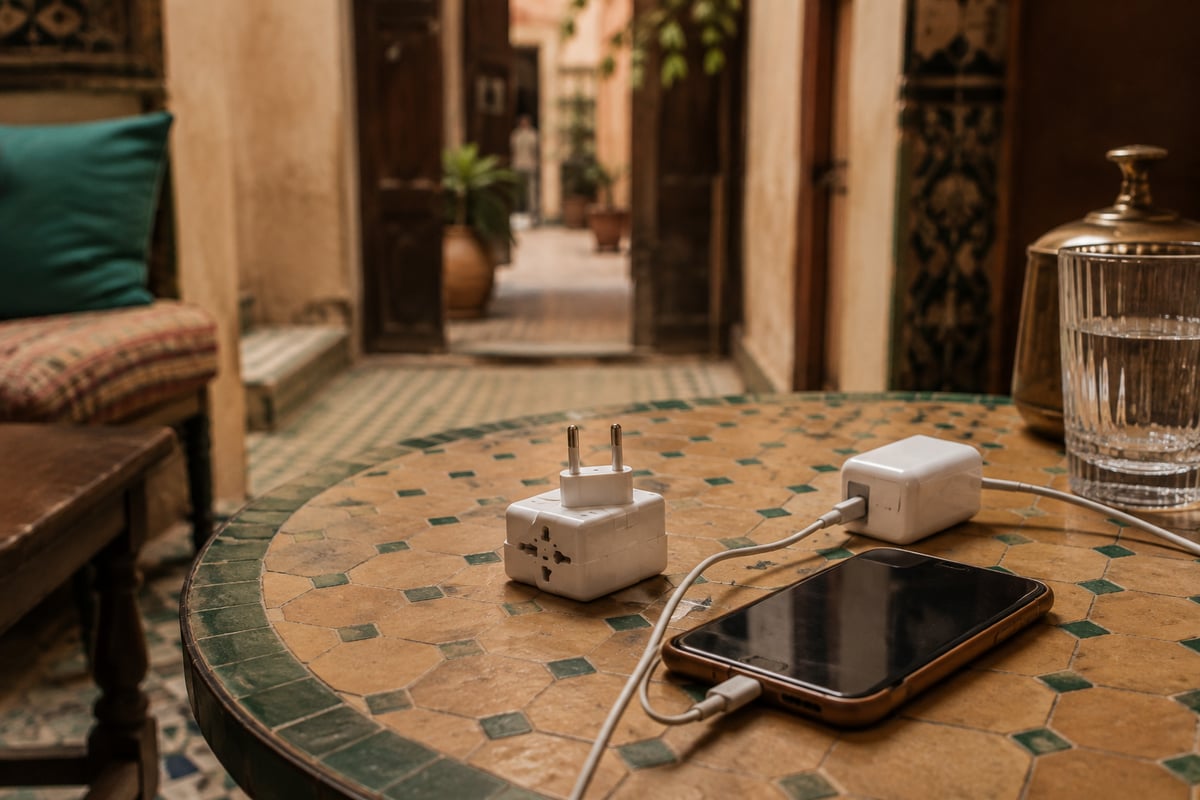
Morocco uses the round two-pin European plug (types C and E) and runs on 220 volts at 50 hertz, the European standard, rather than the flat-pin 110-volt system of the United States. This means two things for an American traveler: your plugs will not physically fit without an adapter, and any device not rated for dual voltage could be damaged by the higher current. Both are easily solved, but both need attention before you travel.
What you need to bring
At minimum, pack a Europe-style plug adapter — ideally two or three, since you will have multiple devices and adapters are easy to misplace. Check each device's label: phones, laptops, cameras and most modern electronics are dual-voltage (marked "100-240V") and need only the adapter, while older or high-wattage items like some hair dryers and curling irons are 110V-only and require a voltage converter or risk being fried. When in doubt, read the fine print on the charger.
The dual-voltage check
The single most useful habit is to check the voltage rating printed on each charger or device before you go: if it says "100-240V" you are fine with just an adapter, which covers almost all phones, laptops and camera chargers. Only the minority of single-voltage, high-heat appliances need a converter, and often the simplest answer is to leave those at home and buy or borrow locally. This one check prevents both a dead device and a damaged one.
Staying charged on the road
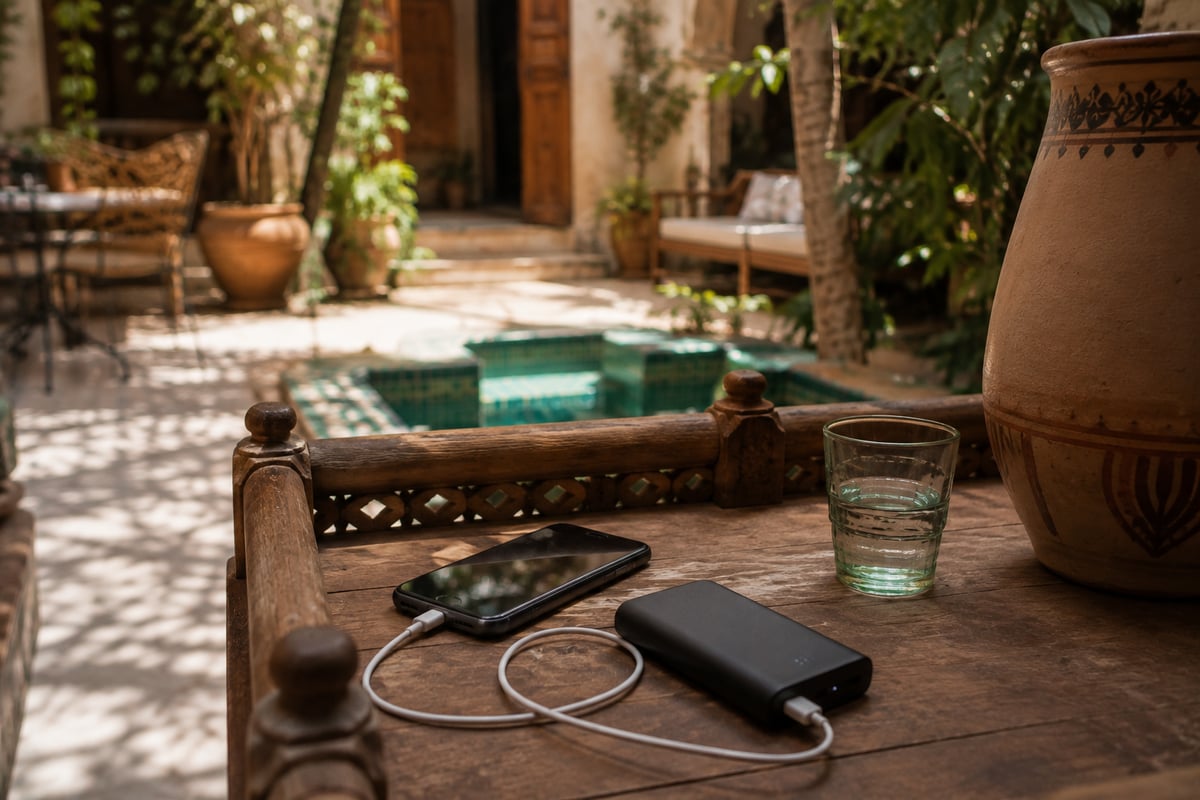
Beyond the adapter, a few habits keep you powered: carry a power bank for long sightseeing days and travel legs, since you will lean on your phone for maps, photos and ride apps; and remember that remote riads, desert camps and mountain lodges may have limited or intermittent electricity. Charge everything fully whenever you have reliable power, especially before heading into the desert, where a socket may be scarce and your camera will be busy.
Charging in remote places
The desert and the mountains are where charging gets genuinely tricky: a desert camp may run on a generator for only part of the evening, and a remote mountain lodge may have limited or intermittent power, so you cannot rely on topping up whenever you like. The answer is a fully charged power bank and the discipline of charging every device to full before you leave the last town with reliable electricity. Treat power as a resource to stock up on before the empty stretches, not something always on tap.
Buying adapters and gear
Adapters are cheaper and simpler to buy at home before you travel rather than hunting for them on arrival, though you can find adapters and chargers in Moroccan cities if you forget. A universal travel adapter that also includes USB ports is a tidy single-item solution that works here and on future trips. Whatever you choose, having it sorted before departure means you are charging your phone the moment you reach your first riad, not scouring a medina for an electronics stall.
A simple charging kit
The setup that covers almost everyone: two or three European adapters, a power bank, a multi-port USB charger to power several devices from one adapter, and the right cables. This small bundle handles the cities, the riads and the desert without fuss. Add a voltage converter only if you are bringing a specific 110V appliance you cannot do without. Sorted before departure, charging becomes a non-issue for the whole trip rather than a daily scramble for a working socket.