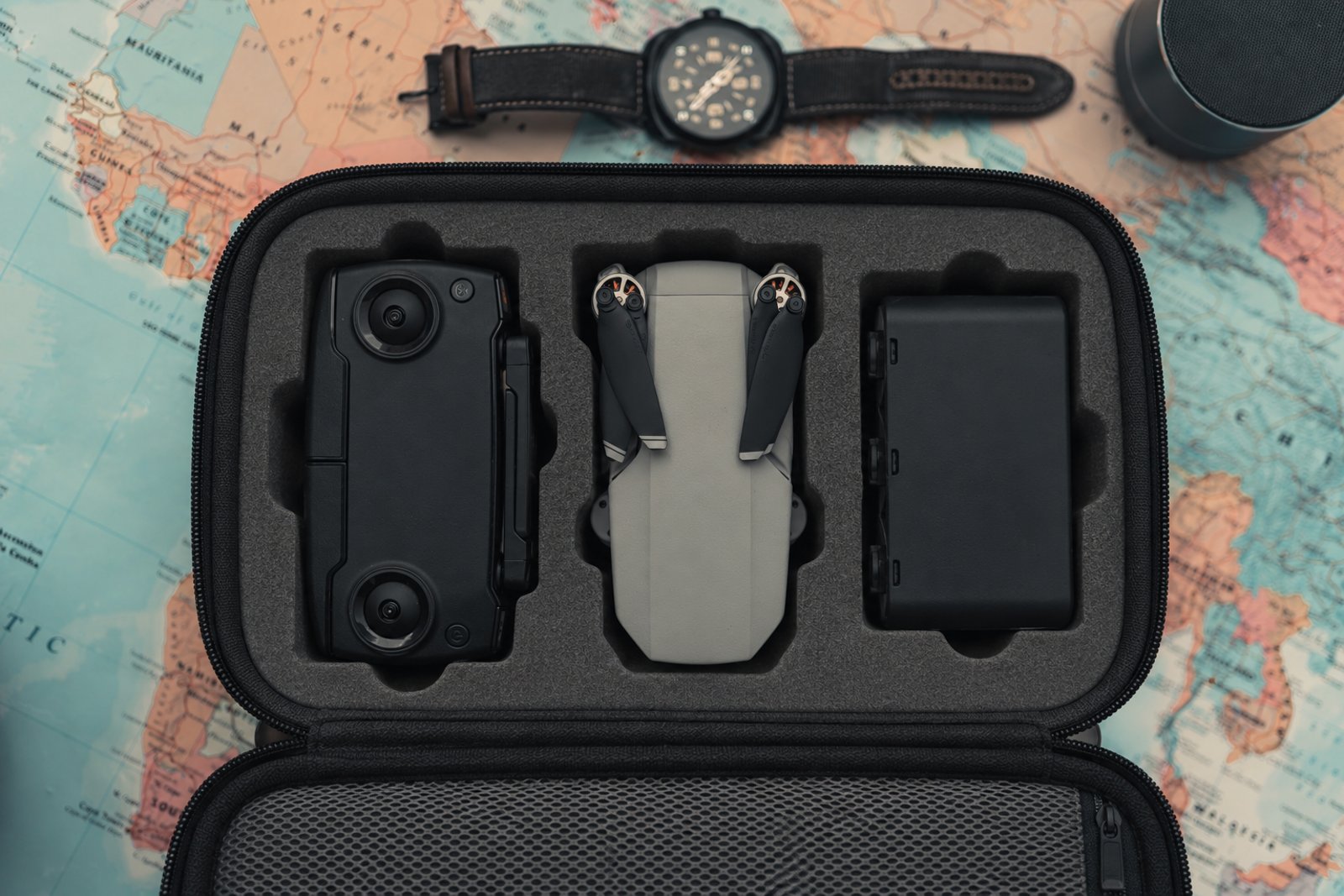
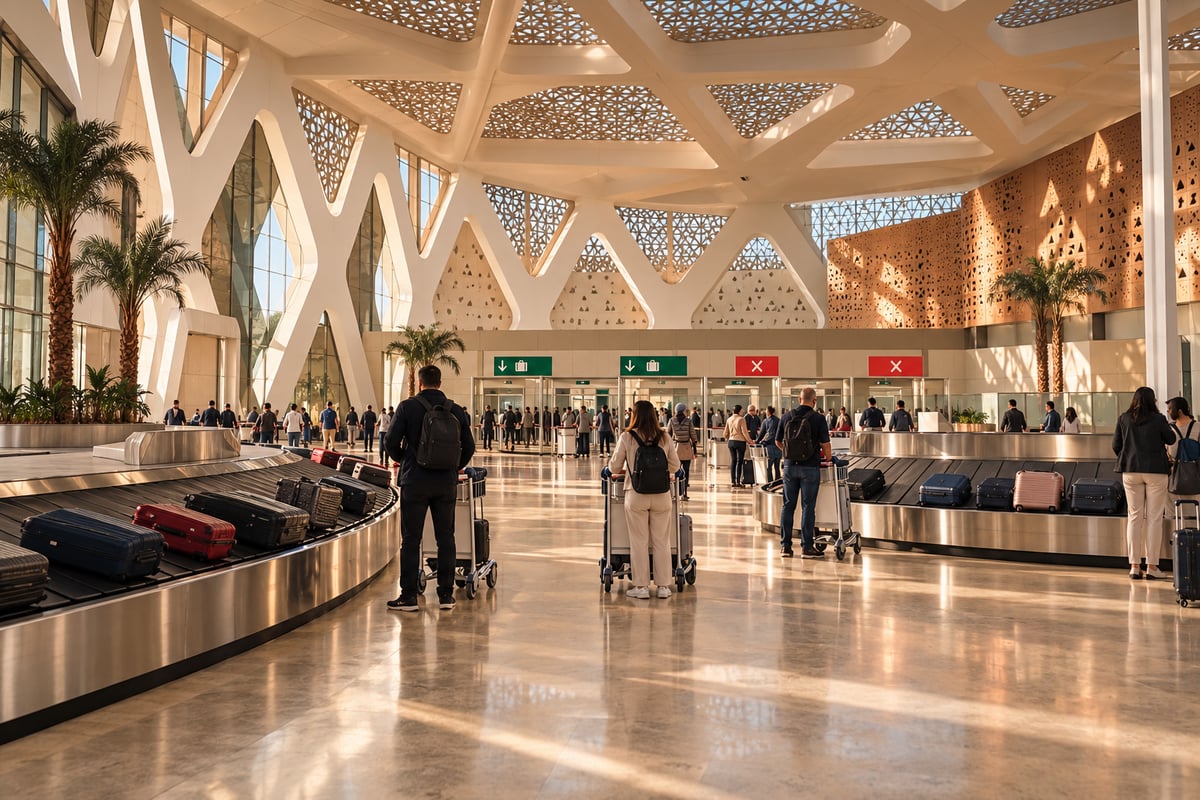
You land in Marrakech or Casablanca, your bag goes through the customs X-ray, and an officer asks you to open it. The drone comes out, a form gets filled in, and you walk into Morocco without it. This happens to American travelers every week, and almost none of them knew it was coming. Here is why it happens, what the paper they hand you means, and how to make sure you actually get the drone back.
Why Moroccan customs confiscates drones at the airport
Moroccan customs confiscates drones because Morocco does not allow private visitors to bring a drone into the country without prior government authorization, and tourists almost never hold one. Customs at Marrakech, Casablanca, Fes and the other international airports screens arriving luggage, and a drone found without that authorization is held at the airport rather than let in. The drone is not destroyed or fined away as a rule; it is kept until you leave. Your own entry is unaffected: Americans still get 90 visa-free on the same passport.
The rule covers consumer camera drones of every size, including the small folding models sold as travel drones. Travelers who assumed a lightweight drone was exempt, the way it can be at home, report it being taken just the same. Toy drones and models without a camera are less consistently caught, but there is no published threshold you can rely on, so treat any drone as covered.
The reason is security rather than privacy or aviation paperwork. Morocco treats aerial photography as a matter for the state, and the authorization that does exist is aimed at film productions and professional surveyors, arranged through official channels well before arrival. A tourist emailing for a permit a few weeks before a trip should not expect an answer.
What happens at the customs desk when your drone is found
When Moroccan customs finds a drone in your luggage, the officer records it, takes it into airport storage and gives you a receipt with your name, your passport details and a description of the item. The receipt is the only thing that gets the drone back. The procedure is the same customs channel that handles currency, so it sits alongside the rule that foreign cash above 100,000 MAD must be declared on arrival.
A few things are worth doing at the desk, while the officer is still in front of you:
Photograph the receipt the moment you get it, and keep the paper copy somewhere you will not lose it, such as your passport wallet.
Check that the description matches: drone, controller, and anything else they keep. If they keep the controller and the batteries too, make sure each is written down.
Ask where the customs office is on the departure side and whether you collect before or after check-in. Officers will usually tell you.
Ask whether a storage charge applies. Practice varies by airport and over time, so ask rather than assume.
Stay calm and polite. The officers are applying a rule, not singling you out, and arguing does not change the outcome. Declaring the drone yourself at the red channel is the cleaner path: it ends in the same receipt, without the awkwardness of a drone found in a bag you said had nothing to declare.
How to get your drone back from customs when you leave Morocco
To get your drone back from Moroccan customs, you collect it in person at the same airport where it was taken, on the day you fly out, by showing the receipt and the passport it was issued against. Customs releases the drone to you on the departure side so that it leaves the country with you. Arrive earlier than you normally would, because the collection depends on finding the right office and an officer free to open storage.
In practice the sequence looks like this:
Get to the airport with generous margin on top of your usual check-in time.
Find the customs office before you check your bags, and ask whether the drone is handed to you there or brought to the gate.
Show the receipt and your passport. If you checked out a controller or batteries, check they are all there.
Pack the drone in your carry-on if your airline requires lithium batteries in the cabin, then go through security as normal.
Customs works from the paperwork, so the name on the receipt matters. If a travel companion is the one flying out of that airport, do not assume they can collect it for you.
On your way out you also pass through the money side of customs again: the dirham is a closed currency, capped at 2,000 MAD (import and export) in or out, so change leftover cash before you reach the gate.
Drones on an open-jaw trip or an overland exit from Morocco
A drone held by Moroccan customs stays at the airport where it was taken, so an open-jaw trip, flying into Marrakech and out of Fes or Tangier, leaves the drone at the wrong end of the country. The same is true if you leave Morocco overland or by ferry to Spain. Customs does not routinely forward a held drone to another exit point, and travelers who expected it to be transferred describe long, uncertain correspondence.
Your realistic options, in order of how well they tend to work:
Leave the drone at home. If your itinerary enters and exits through different places, this is the only option that cannot go wrong.
Change your departure to the arrival airport. Many Morocco loops start and end in Marrakech or Casablanca anyway, and a domestic train or flight back can be cheaper than the drone is worth.
Ask at arrival, in writing, about a transfer. Some travelers have had a drone sent on to another airport, but you are relying on goodwill, not a procedure. Get any agreement noted on the receipt.
Accept the loss. A drone not collected eventually stops being yours to reclaim, and there is no clear published timeline for when that happens.
If you are still choosing a route, this is worth settling at the same moment you choose your airports. Which arrival and exit airports suit a first trip, and what else hangs on that choice, is laid out in the complete morocco trip guide.
Getting the aerial view of Morocco without your own drone
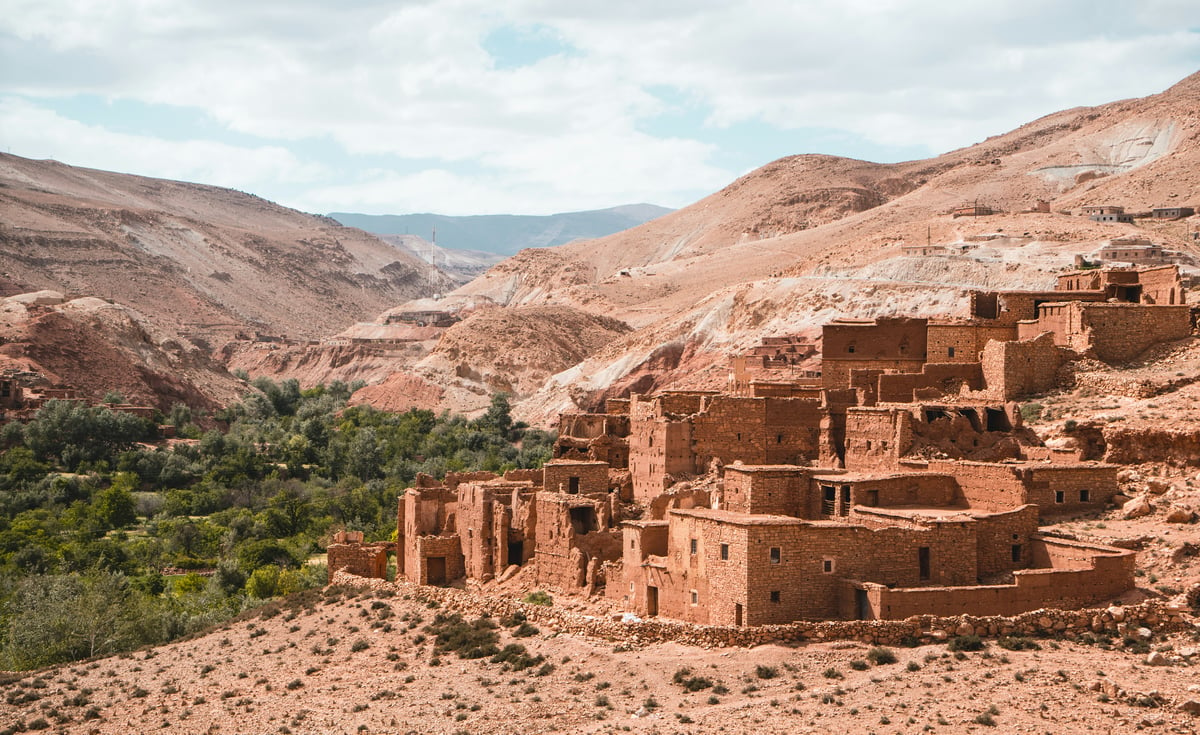
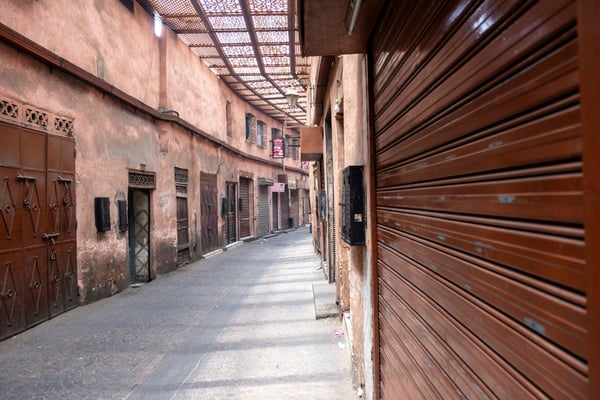
The aerial view of Morocco that tempts drone pilots, the kasbahs of the Dades and Draa valleys, the Atlas passes, the dunes at Merzouga, is mostly reachable without one. Rooftop terraces in Marrakech and Fes medinas look down over whole quarters, the road over the Tizi n'Tichka pass is a sequence of viewpoints, and the high walls of Ait Benhaddou give you the valley from above. A good phone or camera covers most of what a drone would have shot.
If you photograph people in towns and villages, ask first. Many Moroccans would rather not be photographed, and the norms are covered in our guide to etiquette and customs in Morocco. That courtesy matters even more with a long lens than it would have with a drone overhead.
Frequently asked questions
Frequently asked questions about drones in Morocco come down to whether to bring one, whether hiding it works, and what happens to the batteries. The short answers: leave the drone at home unless your trip enters and leaves through one airport, never hide it, and keep the receipt with your passport so customs can release it on departure. Your entry is unaffected, and Americans still receive 90 visa-free.
Can I just hide the drone in my checked bag?
No. Arriving luggage is X-rayed, drones are easy to see, and a drone found after you passed through the green channel puts you in a worse position than declaring it. Declare it, or do not bring it.
Do they keep the batteries and controller too?
Often, yes, because the set counts as the drone. Make sure every item they keep is written on the receipt so you can claim it all back.
Can I get a tourist drone permit before I travel?
Authorization exists for professional and film work arranged through official channels, not as a routine permit for holiday photography. Plan as if you will not get one.
What if I lose the receipt?
Go to the customs office with your passport and your photo of the receipt. Without either, collection becomes much harder, so keep both.
Keep planning
Not sure how it all fits together?
Pick your trip length and we'll route a real day-by-day plan.