Everything a first-time visitor needs for Marrakech — the medina, Jemaa el-Fnaa, where to stay, day trips, and how to handle the hustle with confidence.
Marrakech is where most first trips to Morocco begin, and for good reason — it's the country's sensory heart, a swirl of souks, palaces, gardens, and one of the most famous squares on earth. It can also be gloriously overwhelming on day one. This guide sets you up to enjoy Marrakech rather than just survive it.
Getting to Marrakech
You can fly straight into Marrakech Menara (RAK), which is what most first-timers doing the classic loop do — it saves the transfer from Casablanca. If you land at Casablanca instead, a comfortable ONCF train reaches Marrakech in about three hours. The airport is only about fifteen minutes from the medina; arrange a pickup through your riad for the smoothest arrival, since finding a specific riad in the medina maze with luggage is the one genuinely tricky first-day moment. Our flights guide covers routing from the U.S.
The top things to see
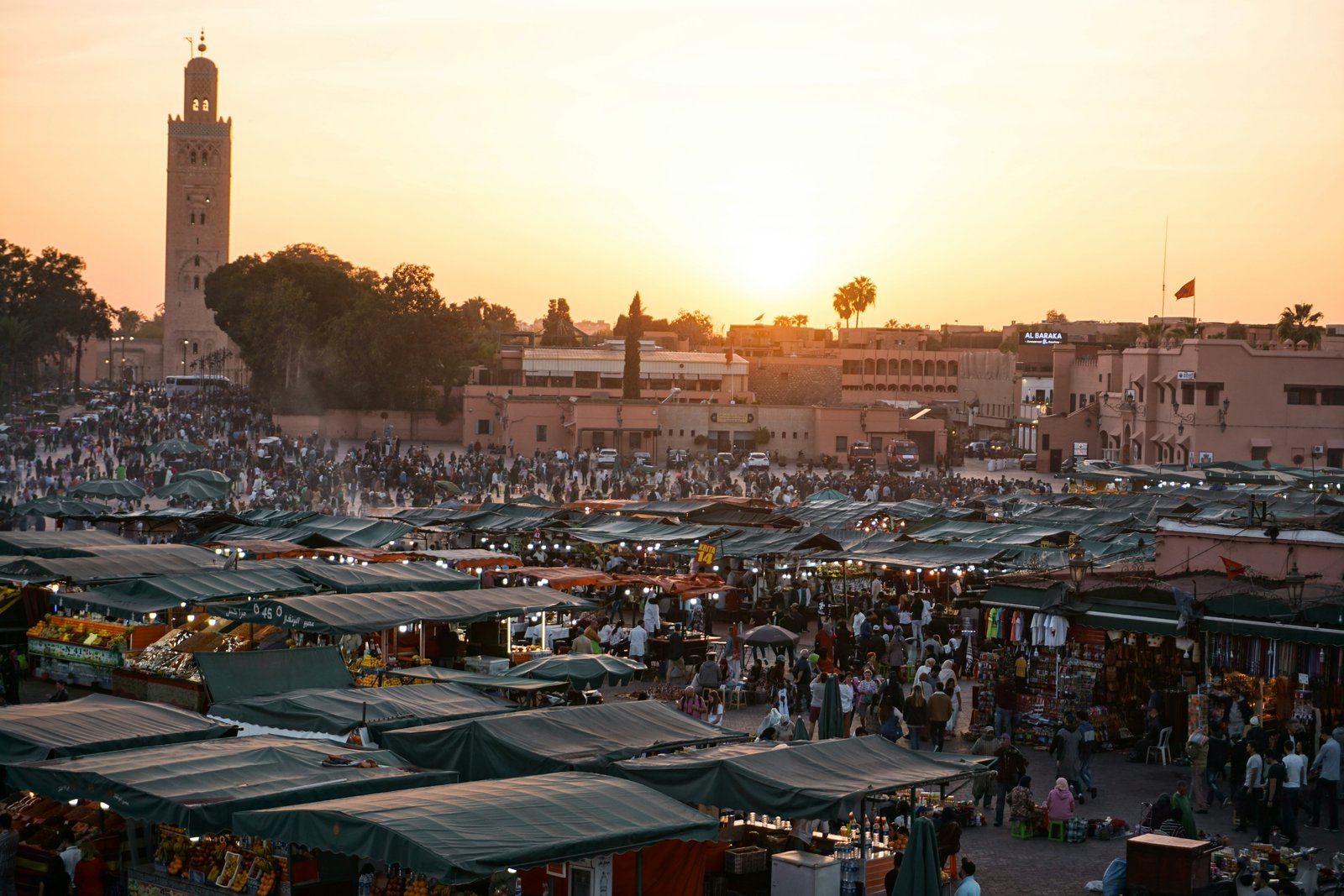
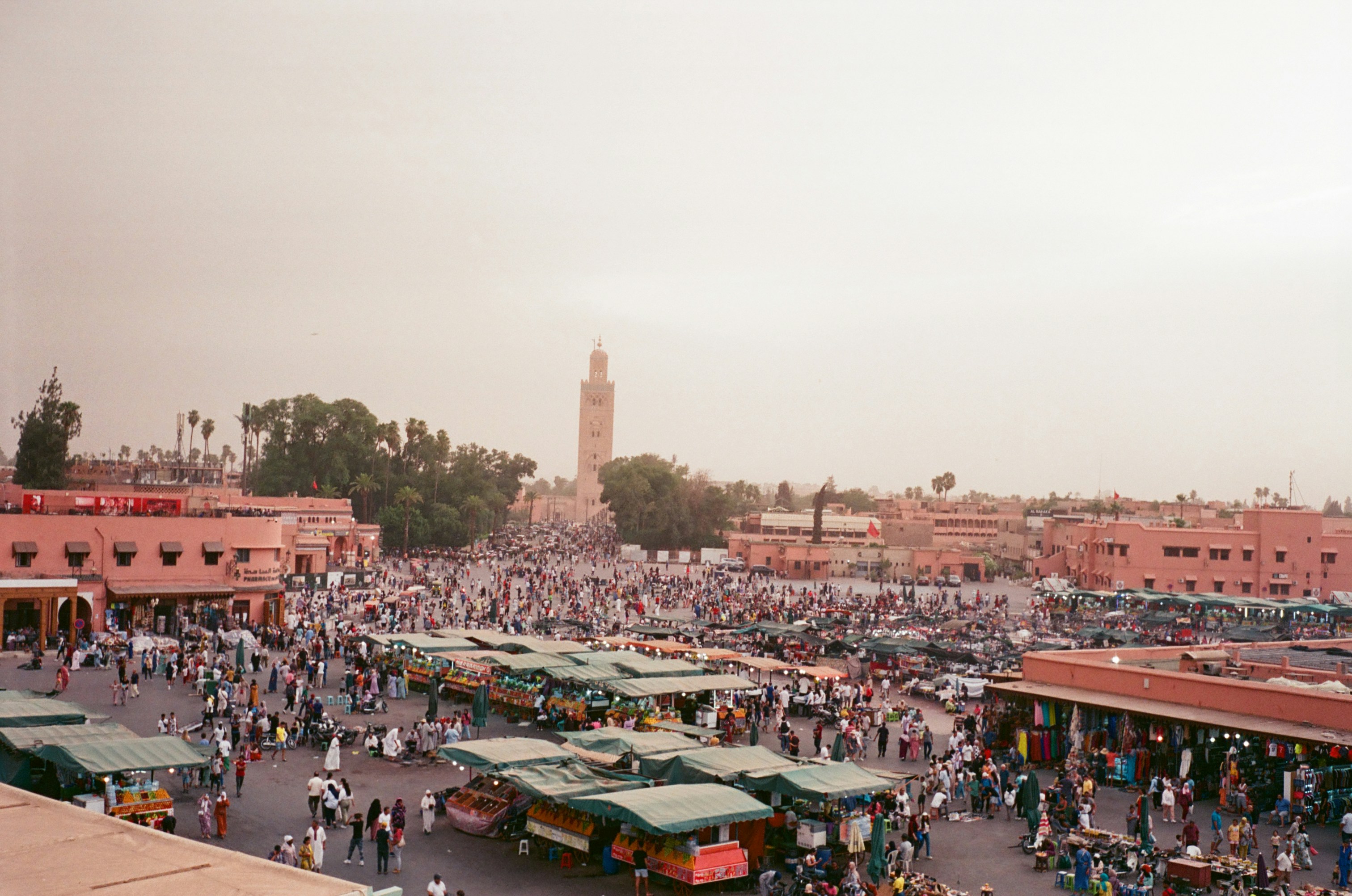
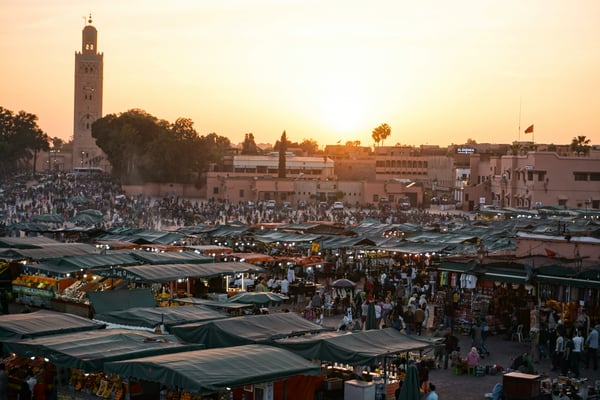
Marrakech's essential sights sit close together: Jemaa el-Fnaa and the souks immediately north of it, the Koutoubia minaret on the square's western edge, and the Bahia Palace and Saadian Tombs to the south. The Majorelle Garden is the one that needs a taxi. Two full days covers all of it without rushing, which leaves room for the aimless wandering that makes the city. The essentials:
Jemaa el-Fnaa
The legendary main square — sleepy by day, electric at dusk when food stalls, musicians, and storytellers take over. Watch it fill up from a rooftop cafe with a mint tea, then dive in.
The souks
The labyrinth of markets north of the square, selling everything from lanterns and leather to spices and rugs. Getting lost here is the point; haggling is expected (our haggling guide helps).
Palaces and gardens
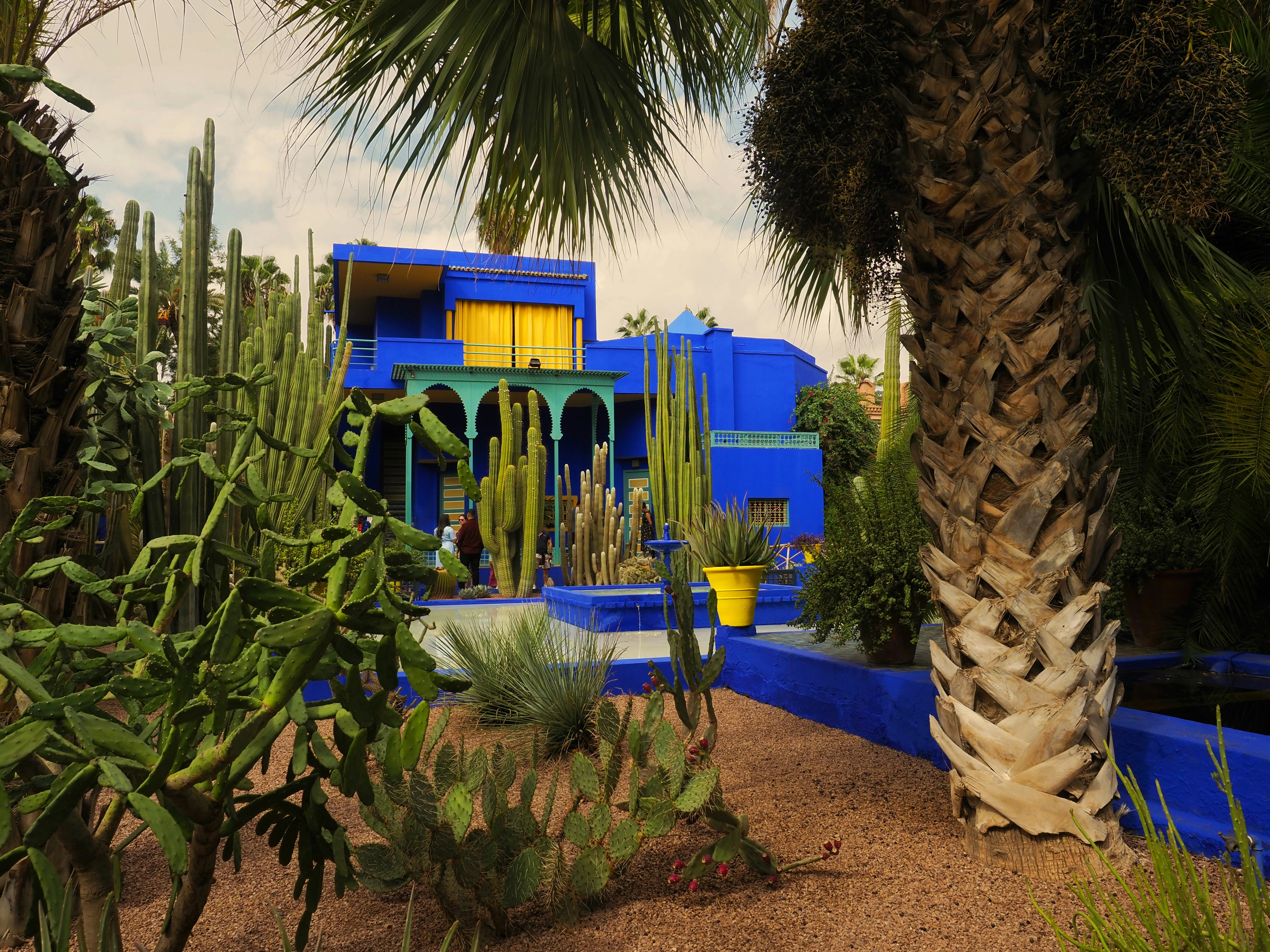
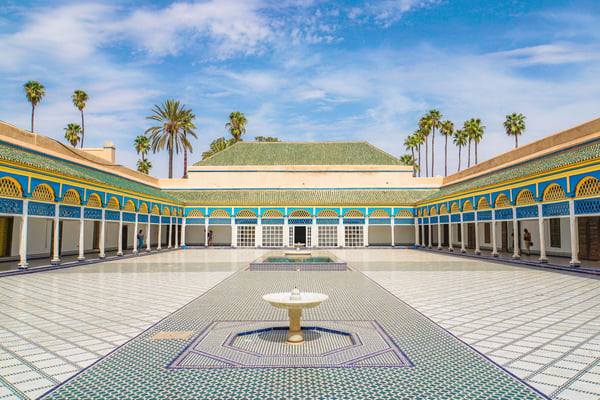
The ornate Bahia Palace, the serene Saadian Tombs, the historic Ben Youssef Madrasa with its dazzling tilework, and the cobalt-blue Majorelle Garden (and the adjacent YSL museum) for a calm, green break. The Koutoubia minaret anchors the skyline — you can admire it from outside, though the mosque itself isn't open to non-Muslims.
Your base shapes the whole experience. The classic choice is a riad in the medina — steps from the action, atmospheric, and a quiet courtyard retreat from the bustle. If you'd rather have modern hotels, restaurants, and easier logistics, Gueliz (the Ville Nouvelle) is the modern district; Hivernage is upscale and quieter; and the Palmeraie offers resort-style stays outside the center. Most first-timers pick a medina riad for the atmosphere. Our where to stay in Marrakech guide breaks down the areas.
Day trips from Marrakech
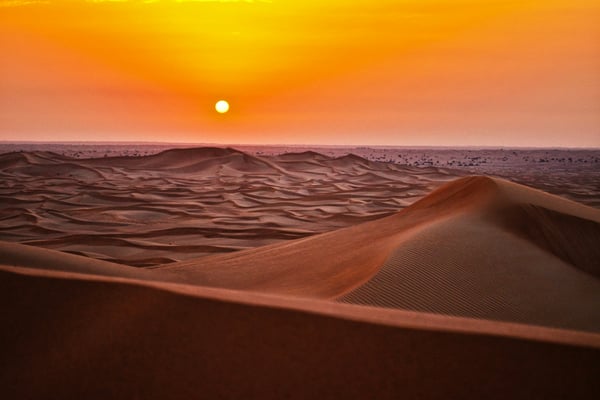
Marrakech is the launchpad for some of Morocco's best excursions. The Ourika Valley and Atlas foothills are an easy 1–1.5 hours out for Berber villages and waterfalls; the Agafay stone desert offers a close sunset-camp experience without the long desert drive; Essaouira on the coast makes a good full-day escape; and the Sahara at Merzouga is the big one — a multi-day guided trip (see our Sahara tours from Marrakech guide).
Handling the hustle
Marrakech is friendly but also the most touristed city in Morocco, which means touts, faux guides, and the occasional scam. None of it is dangerous — a firm, polite "la shukran" (no thank you) and walking on handles most of it. Ignore anyone insisting a street or sight is "closed," agree taxi fares before getting in, and settle a price before any photo with a performer. Our safety guide preps you fully. Go in expecting a bit of theater and it becomes part of the fun rather than a stressor.
Getting around Marrakech
The medina is car-free and best explored on foot — expect to walk a lot, and wear comfortable shoes for the uneven lanes. For longer hops (to Gueliz, the Majorelle Garden, or the train station), small metered petit taxis are cheap; insist on the meter or agree the fare first, as some drivers will claim it's broken. Horse-drawn carriages (calèches) are a touristy but pleasant way to loop the ramparts. Ride-hail apps operate in the city too. One tip: note a nearby landmark or gate for your riad, because GPS struggles in the dense medina and you'll navigate the last stretch on foot by feel.
Eating in Marrakech
Marrakech is a fantastic place to eat, from street food to refined rooftop dining. Start with the Jemaa el-Fnaa food stalls for atmosphere (choose busy ones), graduate to rooftop riad restaurants for tagine with a view, and seek out the modern Moroccan spots in Gueliz for a calmer sit-down meal. Don't miss street classics like fresh orange juice from the square, msemen (flaky pancakes) at breakfast, and a pastry with mint tea in the afternoon. A cooking class or food tour is a great way to go deeper — our guide to Moroccan dishes tells you what to order.
Best time to visit Marrakech
Marrakech is at its best in spring (March–May) and fall (September–November), when days are warm and evenings pleasant. Summer is intensely hot — often over 100°F — which makes midday sightseeing tough, though early mornings, late evenings, and shady riad courtyards with plunge pools help. Winter days are mild and sunny but nights get cold, so pack layers. The city runs year-round, but timing your visit for the shoulder seasons makes the walking, the souks, and the day trips far more comfortable; see our when-to-go guide for the full picture.
How long to stay
Two to three days is right for a first visit — enough for the sights, the souks, an evening or two at Jemaa el-Fnaa, and a day trip. It's also the natural starting point before heading to the desert and Fez, as laid out in our 10-day itinerary. Give the city a relaxed first day to acclimate, and let the medina reveal itself slowly. How Marrakech fits the wider route is covered in the complete Morocco trip guide.
Marrakech FAQ
How many days do you need in Marrakech?
Two to three days covers the main sights, the souks, Jemaa el-Fnaa, and a day trip — and it's the ideal launch point for the desert and Fez.
Where should first-timers stay in Marrakech?
Most choose a riad in the medina for the atmosphere and central location. Gueliz suits those who prefer modern hotels and easier logistics.
Is Marrakech safe for tourists?
Yes, with normal precautions. The main issues are touts and scams, not danger — a polite refusal and settling prices in advance handle most of it.
What's the best day trip from Marrakech?
The Atlas Mountains (Ourika Valley) for an easy day out, or a multi-day Sahara tour to Merzouga for the bucket-list desert night.