The Argan Oil Cooperative Visit: Real vs. Tourist Trap
Argan oil cooperatives are a lovely stop — and a favourite commission drop for drivers and guides. How to tell a genuine women's cooperative from a staged one.
An argan oil cooperative is one of the more pleasant stops on a Moroccan road trip, and also one of the most reliable places a driver or guide will deliver you for a commission. Genuine women's cooperatives do real good and sell a real product; staged ones exist mainly to pay whoever brought you. Telling them apart is straightforward once you know what the commission structure makes the difference, and what to look for on the ground.
Why you keep being taken there
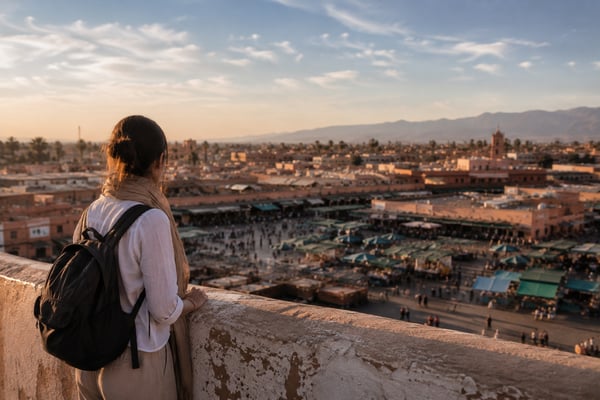
Argan cooperatives sit on the tourist routes between Marrakech, Essaouira and the south, and drivers and guides are often paid a commission to stop at particular ones, exactly as they are for carpet and craft shops. That does not make the stop bad — the oil is genuine and the visit interesting — but it explains why it appears on your itinerary whether or not you asked. Knowing who benefits lets you enjoy the stop without being steered into overpaying.
What a genuine cooperative looks like
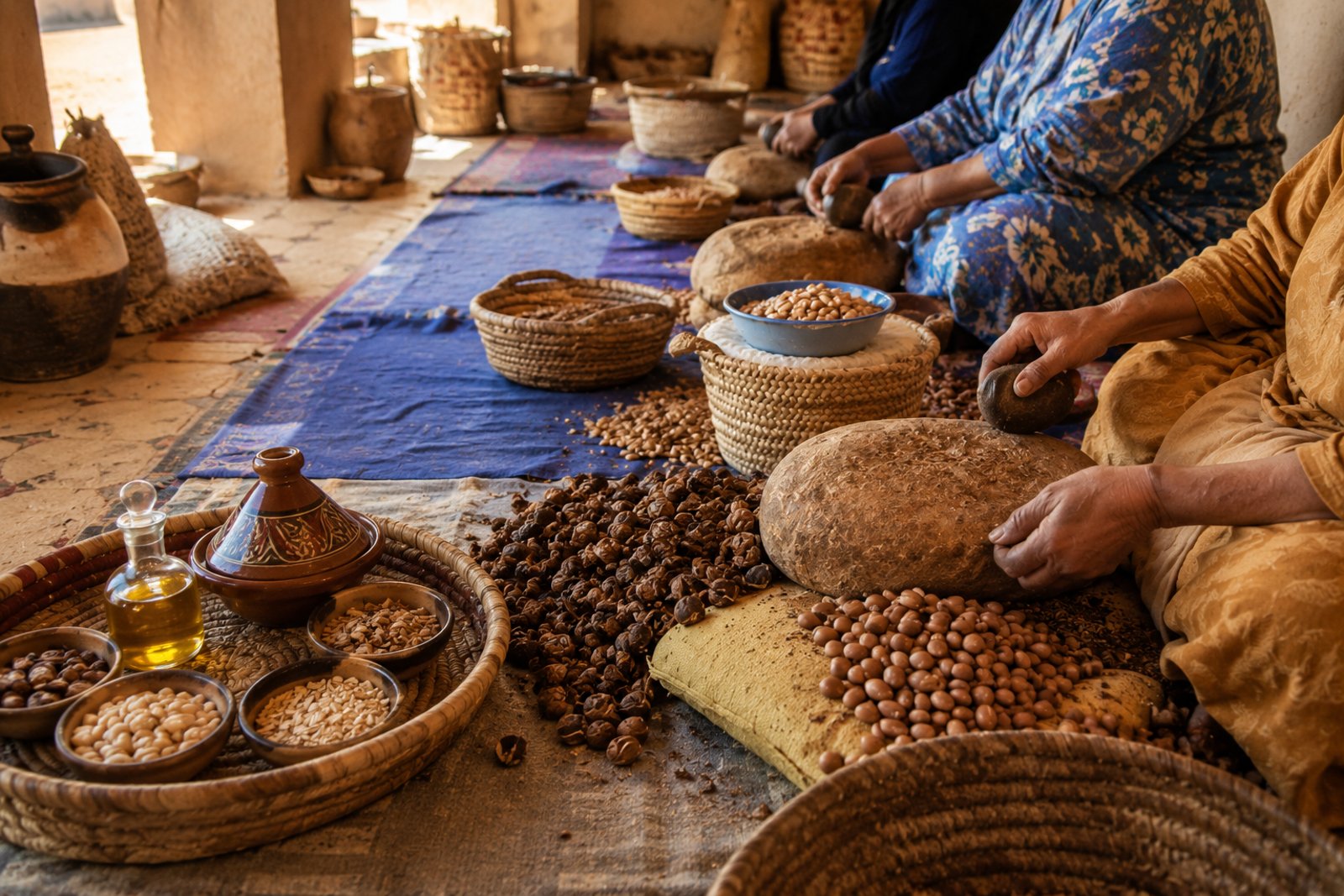
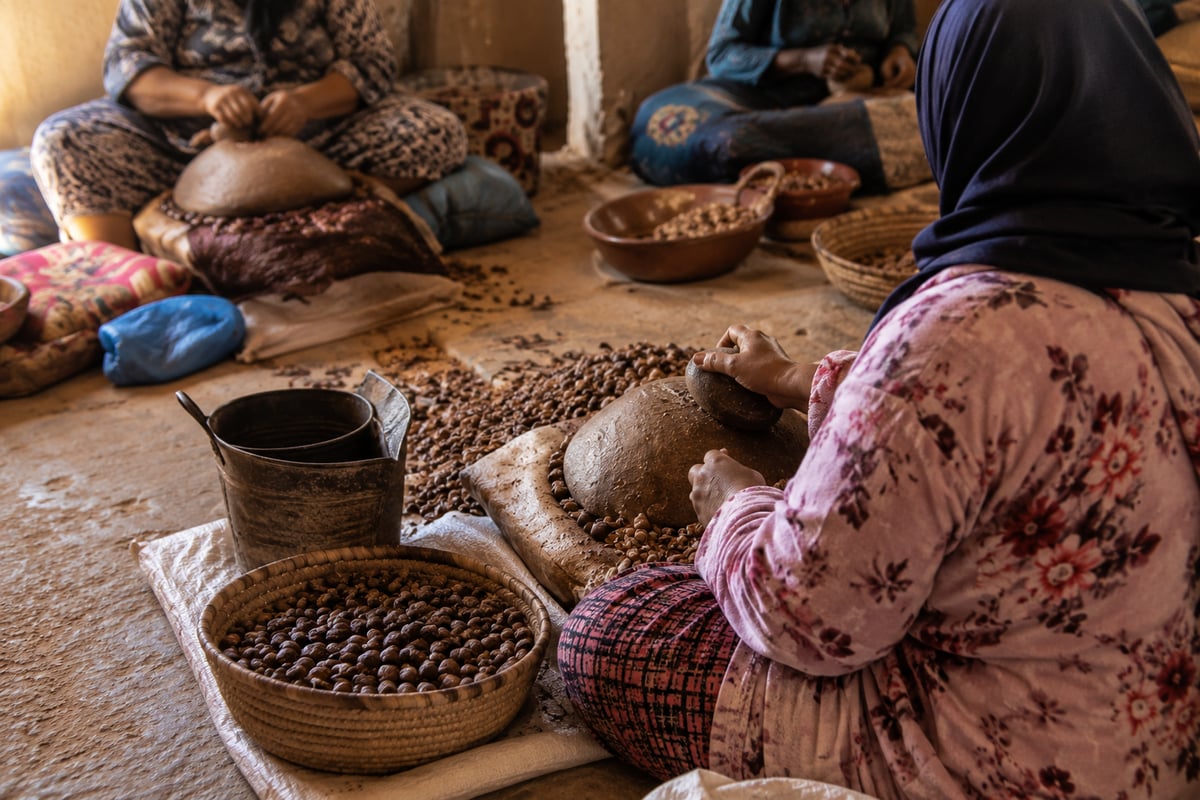
A real women's cooperative is a working operation: you see women cracking the argan nuts and grinding the paste by hand, the process is explained without heavy pressure to buy, and the prices are fixed and fair rather than negotiated. These cooperatives were set up to give rural women income and independence, and a genuine one feels like a workplace you are visiting, not a showroom built around a till. The demonstration is real work, not a performance staged for the coach.
The signs of a staged stop
A staged operation tips its hand: a hard sell the moment you arrive, prices that flex if you hesitate, a "demonstration" that is thin and hurried, and a shop far larger and glossier than the tiny production area behind it. If the pressure to buy outweighs the interest in showing you the craft, you are in a commission trap wearing a cooperative's name. You can look, decline, and leave — the visit costs you nothing but the driver's disappointment.
Buying argan oil well
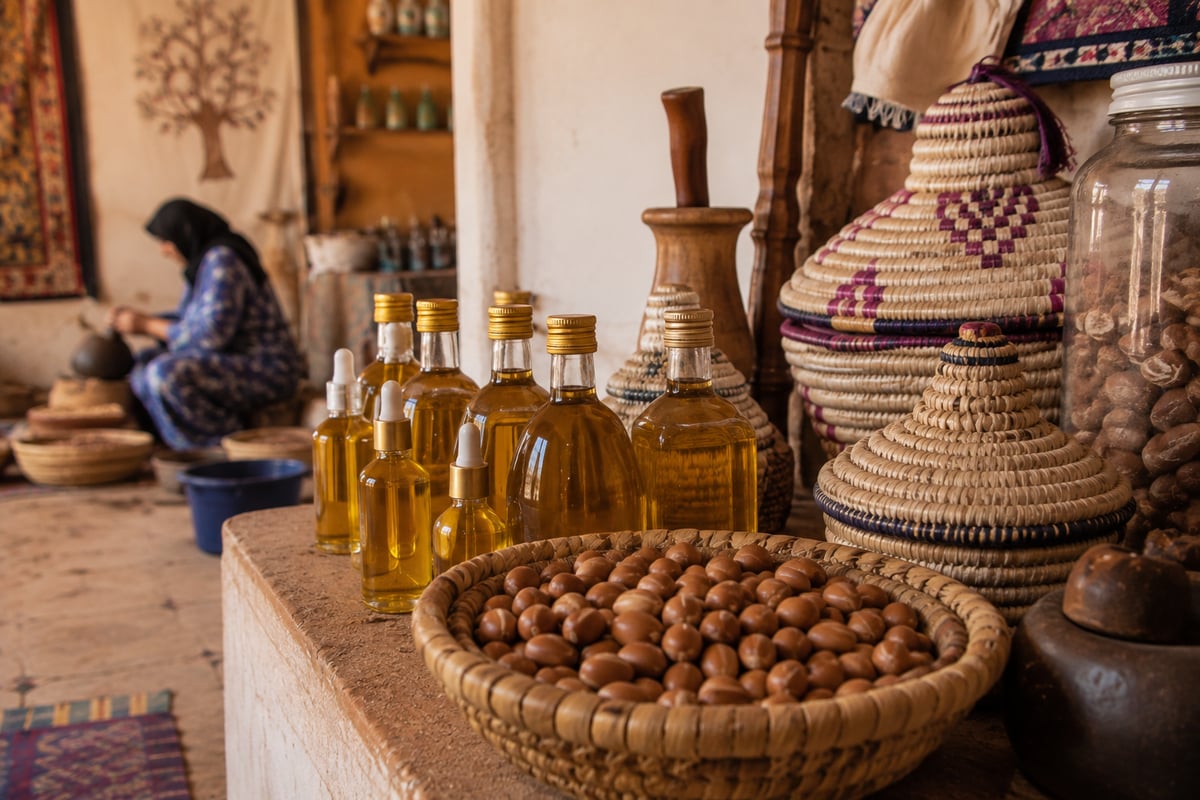
If you want to buy, and it is a lovely thing to bring home, buy at a cooperative that shows genuine production, choose culinary or cosmetic grade knowingly, and pay the fixed price without feeling rushed. Real argan oil is not cheap, since the process is enormously labour-intensive, so a suspiciously low price is its own warning. Buying from the source supports the women who made it and usually means better oil than a souk middleman offers.
What argan oil actually is
Argan oil is pressed from the nuts of the argan tree, which grows almost entirely in southwestern Morocco — with small pockets across the border in western Algeria — and the traditional hand process is genuinely laborious: cracking the hard shells between stones, roasting or leaving the kernels raw, and grinding them into a paste that yields the oil. Culinary argan, from roasted kernels, is nutty and used in food; cosmetic argan, from raw kernels, goes on skin and hair. Understanding the two grades stops you buying the wrong one.
Why real argan costs what it does
The sheer labour behind each bottle is why genuine argan oil is never cheap, and why a bargain price should make you suspicious rather than pleased — it usually signals dilution with other oils. Buying from a cooperative that shows the production, at a fixed and frankly high price, is the reliable way to get the real thing. The cost is the craft; paying it is how you know you are getting argan rather than something cut with cheaper oil.
How to handle the stop
Treat the cooperative as you would any commission-driven stop: go in curious, enjoy the demonstration, and buy only if you genuinely want to and the operation feels real. You are never obliged to purchase to justify the visit, whatever the atmosphere implies. A polite thank-you and a walk back to the car is always available, and a good driver takes it in stride as part of the job.
The argan stop is the same commission machinery as the carpet shop and the faux guide, just wearing a more wholesome face — a place you were paid to be brought. How that structure runs through the trip, and what it should change, is worked out in the complete Morocco trip guide.