The dirham you couldn't buy before the trip is also hard to get rid of after it. Why to spend down, the export limit, and how to time your last withdrawal.
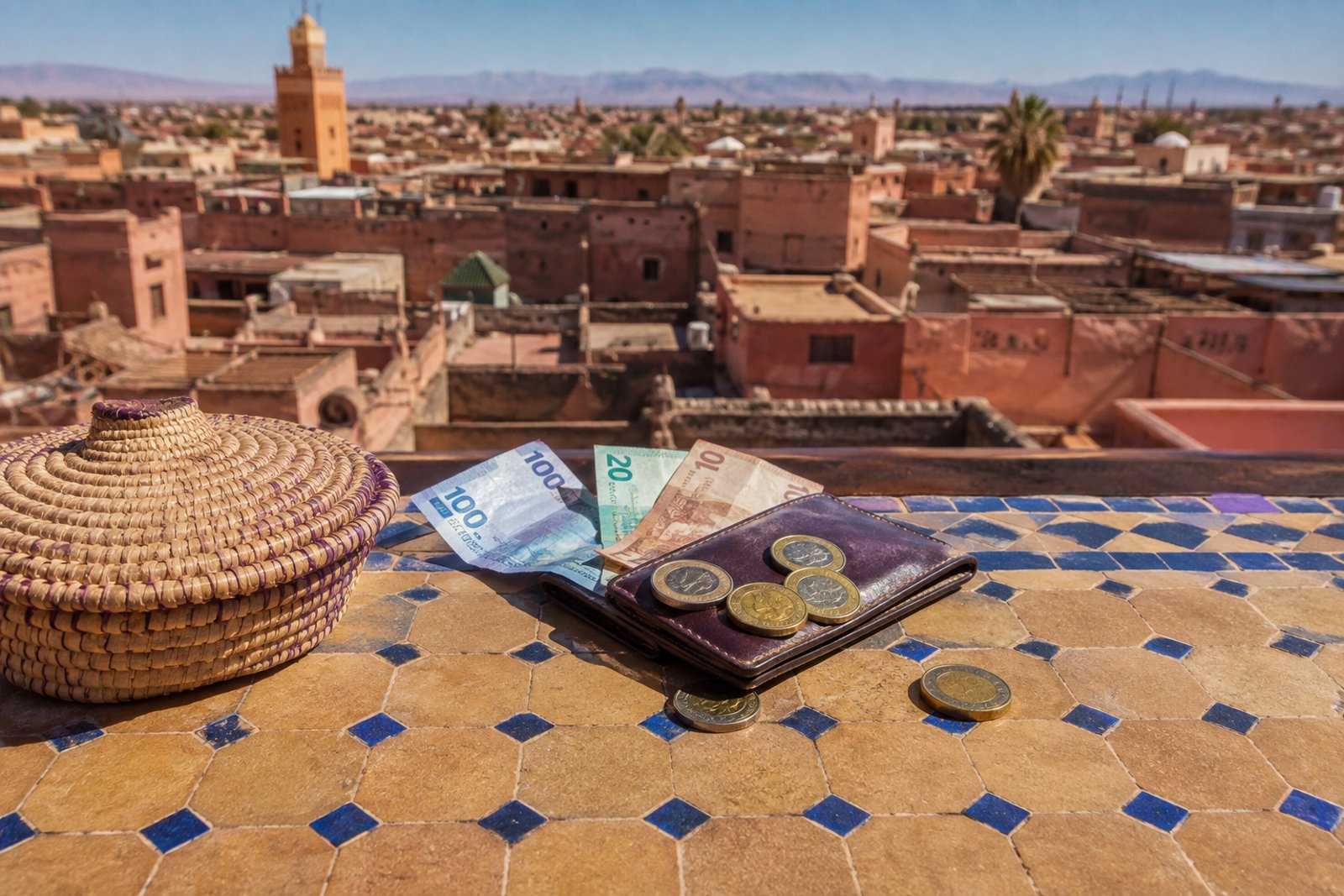
The closed currency that stopped you buying dirham before your trip creates a mirror problem at the end: leftover dirham is difficult to change back and mostly cannot leave the country, so the goal in your final days is to land near zero rather than carry a wad of notes you cannot use. A little planning in the last forty-eight hours turns this from a small loss into a non-issue.
Why dirham is hard to offload
Because the dirham is a closed currency, it is not freely traded outside Morocco, so exchange desks at home either refuse it or offer a poor rate, and the coins are worthless abroad entirely. What you carry out is effectively stranded value. This is the practical reason the advice throughout the trip is to withdraw in sensible amounts rather than stockpiling cash you might not spend.
The export limit
There is also a legal ceiling on taking dirham out of the country: no more than 2,000 MAD, and exceeding it is a customs violation rather than a mere formality. In practice you should be well under that simply by spending down, but it is worth knowing the rule exists, especially if a large final withdrawal left you holding more than you expected.
Time your last withdrawal
The cleanest approach is to stop withdrawing dirham a couple of days before departure and let card-friendly places absorb the rest of your spending. Estimate what you genuinely need for the final days — meals, taxis, tips, the airport — and take out only that. Running slightly short and topping up with a card beats ending the trip with notes you have to give away or abandon.
What still needs cash at the end
Keep enough small notes for the things that stay cash-only right to the last minute: the taxi or transfer to the airport, final tips for riad staff and porters, water, and any small purchases in the departures area. Everything else — a last dinner, a hotel bill — can usually go on a card. Holding back a modest, deliberate cash float for these avoids both a shortfall and a surplus.
Ways to spend it down painlessly
If you find yourself with more dirham than the last day can absorb, the good options are all pleasant: a final meal out, gifts and souvenirs from a fixed-price shop, a generous tip for a guide or driver who earned it, or topping up someone's service you were glad of. These turn leftover cash into something worthwhile rather than a rounding error handed to an airport exchange desk at a bad rate.
The end-of-trip cash plan
A simple plan makes the last days effortless: three or four days out, take a rough tally of what remains and what the final days require, then stop feeding the wallet from the ATM. Steer big remaining expenses — a hotel bill, a nice dinner — onto a card, and let the cash drain toward the essentials. The aim is to walk into the airport with pocket change, not a brick of notes.
Coins are the first to go
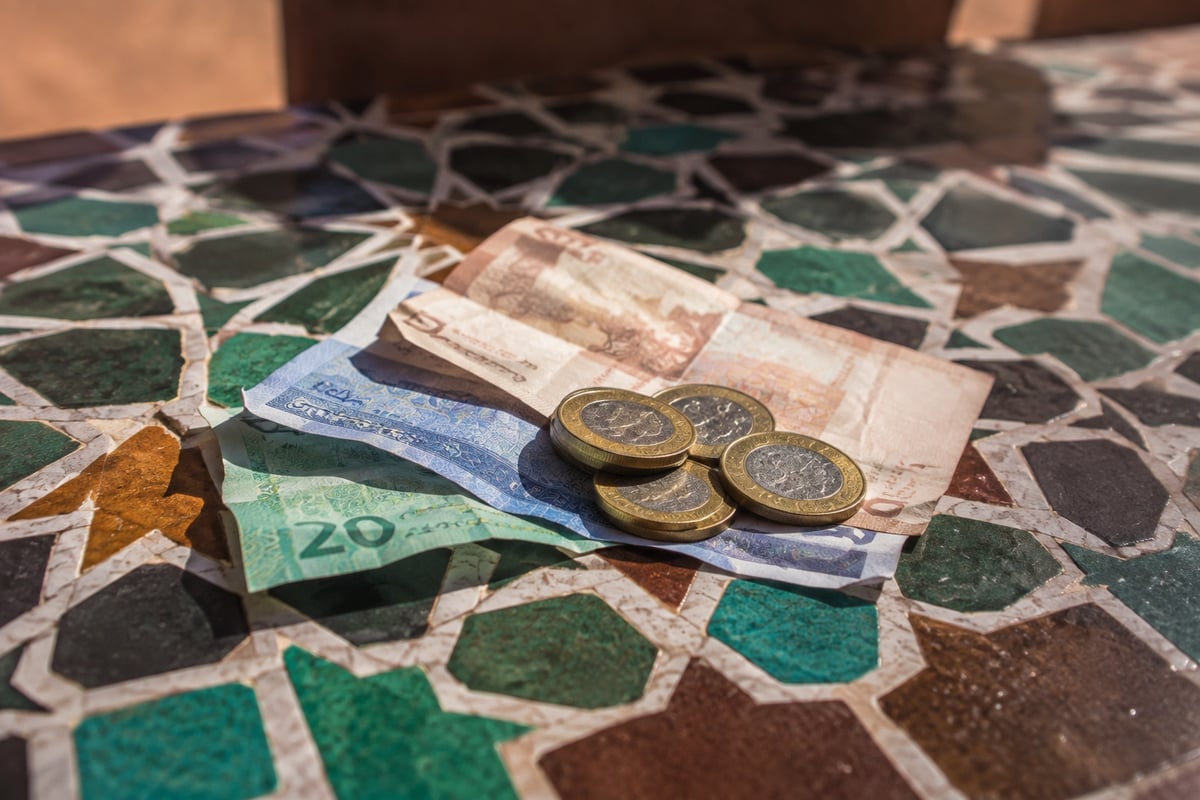
Coins are worth nothing outside Morocco and cannot even be exchanged at home, so spend them first and deliberately: water, tips, a coffee, small souvenirs. Notes are at least changeable, however poorly, but coins are pure stranded value once you leave. Emptying the coin pocket before the notes is a small habit that saves the most obviously wasted money.
If you do end up with extra
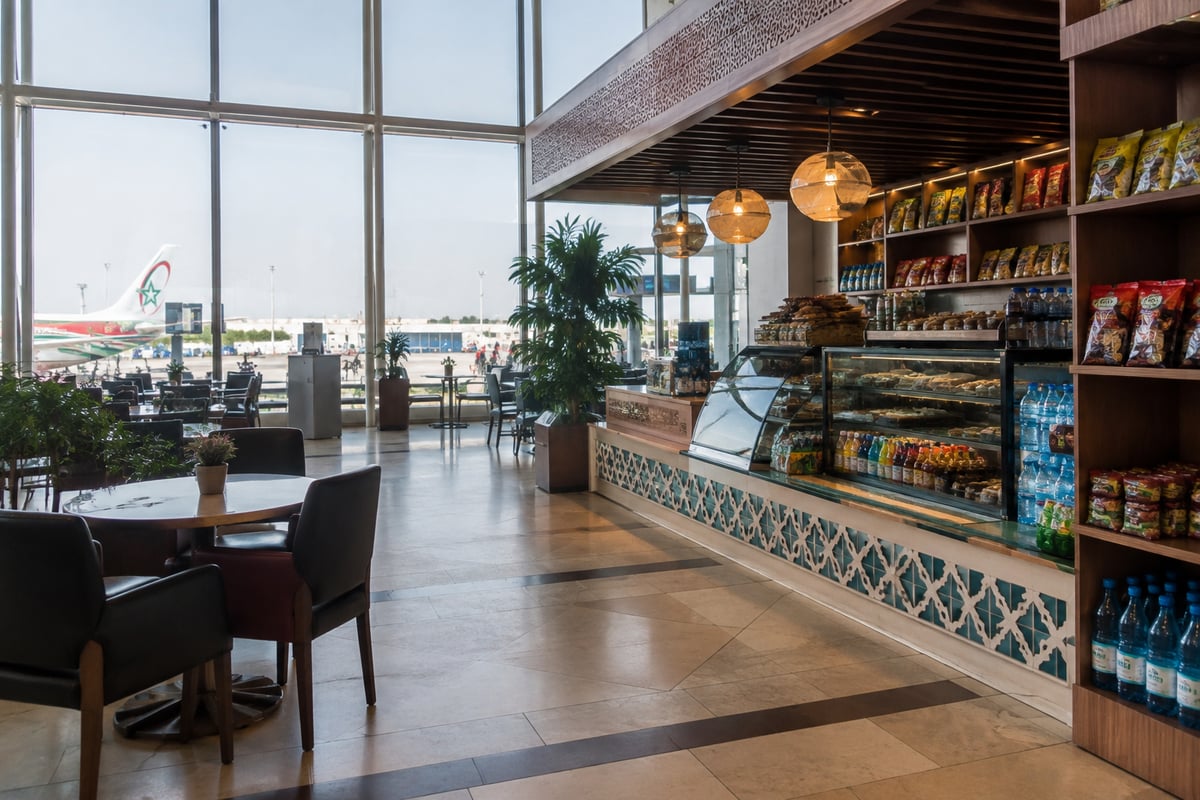
Should you leave with dirham despite your best planning, spend it before you clear security — airport shops and cafes inside Morocco still take it — or accept that changing a small amount back home will cost you. The airport exchange counter is the last resort it always was: convenient and poorly priced. Better to have handed the difference to a person who served you well than to a currency desk.
Leftover dirham is the closing bracket of the same fact that opened the trip: a currency you cannot buy in advance is also one you cannot easily carry away, so the whole journey is best paid in cash you draw down to nothing. How that arc runs from the arrival ATM to the last night is worked out in the complete Morocco trip guide.