Most of what Americans call scams in Morocco are not crimes and rarely involve any danger — they are commercial approaches that work by making a polite visitor feel obliged. Violent crime against tourists is rare; the realistic annoyances are the ones below, and they run on the same mechanism every time. Once you can see the mechanism, they stop working, and you can be friendly without being on guard all day.
The faux guide, and how he gets paid
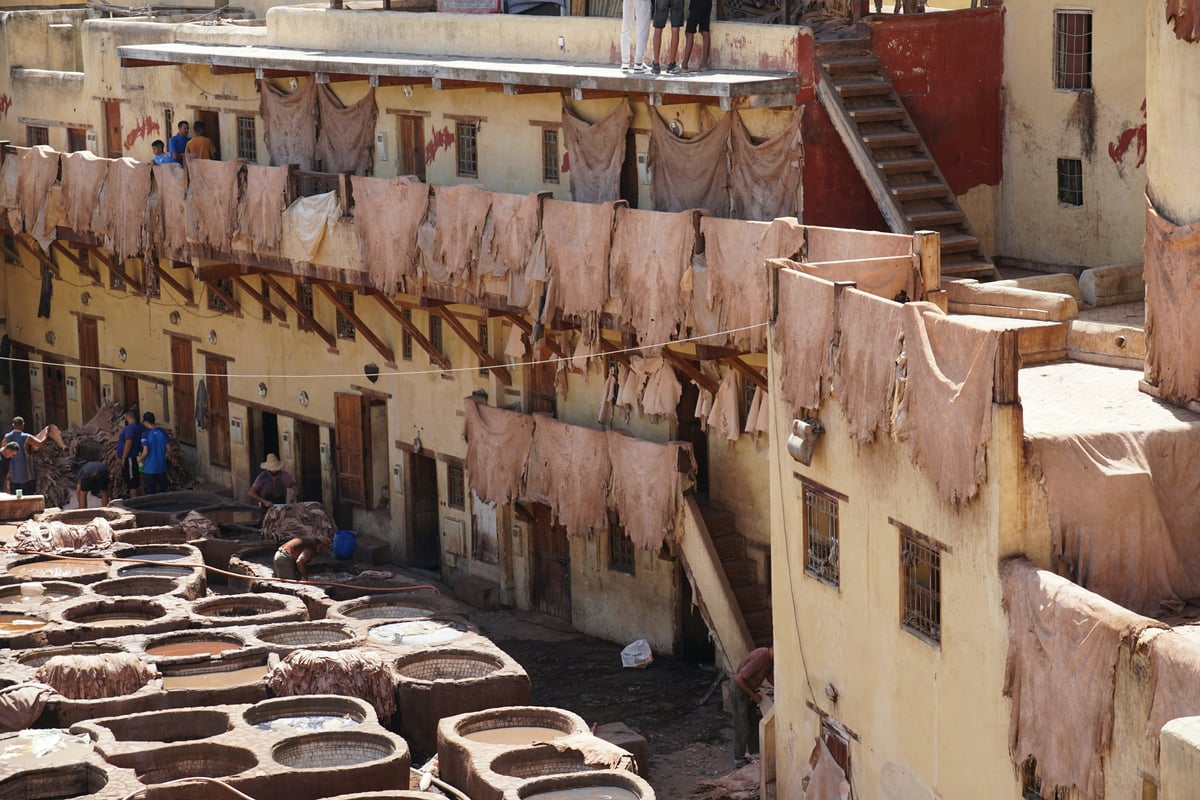
A faux guide — an unofficial one — attaches himself to you in the Fez or Marrakech medina, usually by telling you that the way you are walking is wrong, closed, or leads nowhere. He is not lying for its own sake: his income comes from where he delivers you, because the workshops, tanneries and showrooms he walks you into pay him a share of whatever you spend inside. The tour is free precisely because you are not the customer.
Why that changes what you should do
Knowing who pays him tells you the whole shape of the encounter. He will be charming, genuinely knowledgeable, and steering the entire time, and the destination was decided before you met. A firm, friendly "no thank you" while continuing to walk is enough, and repeating it once without slowing down ends nearly every approach.
"This street is closed"
The most common opener in Fez and Marrakech is a stranger telling you the lane ahead is shut, the souk is closed today, or the sight you are heading for opens later. It is almost never true. The purpose is to redirect you toward somewhere the speaker benefits from, and the correct response is to thank them and keep going the way you were already going.
The henna hand and the photographed monkey
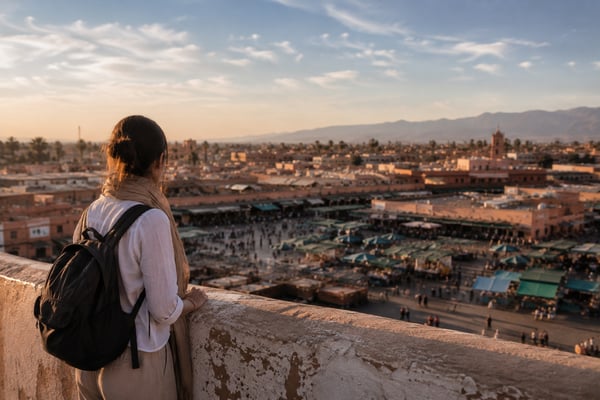
On Jemaa el-Fnaa and in similar squares, a woman may take your hand and begin applying henna before you have agreed to anything, or an animal handler may place a monkey on your shoulder while a friend photographs you. Payment is demanded afterwards, at a number invented on the spot. Keep hands in pockets, do not accept an object placed in your hands, and if something has already started, hand it back and walk away.
Why the medina makes it work
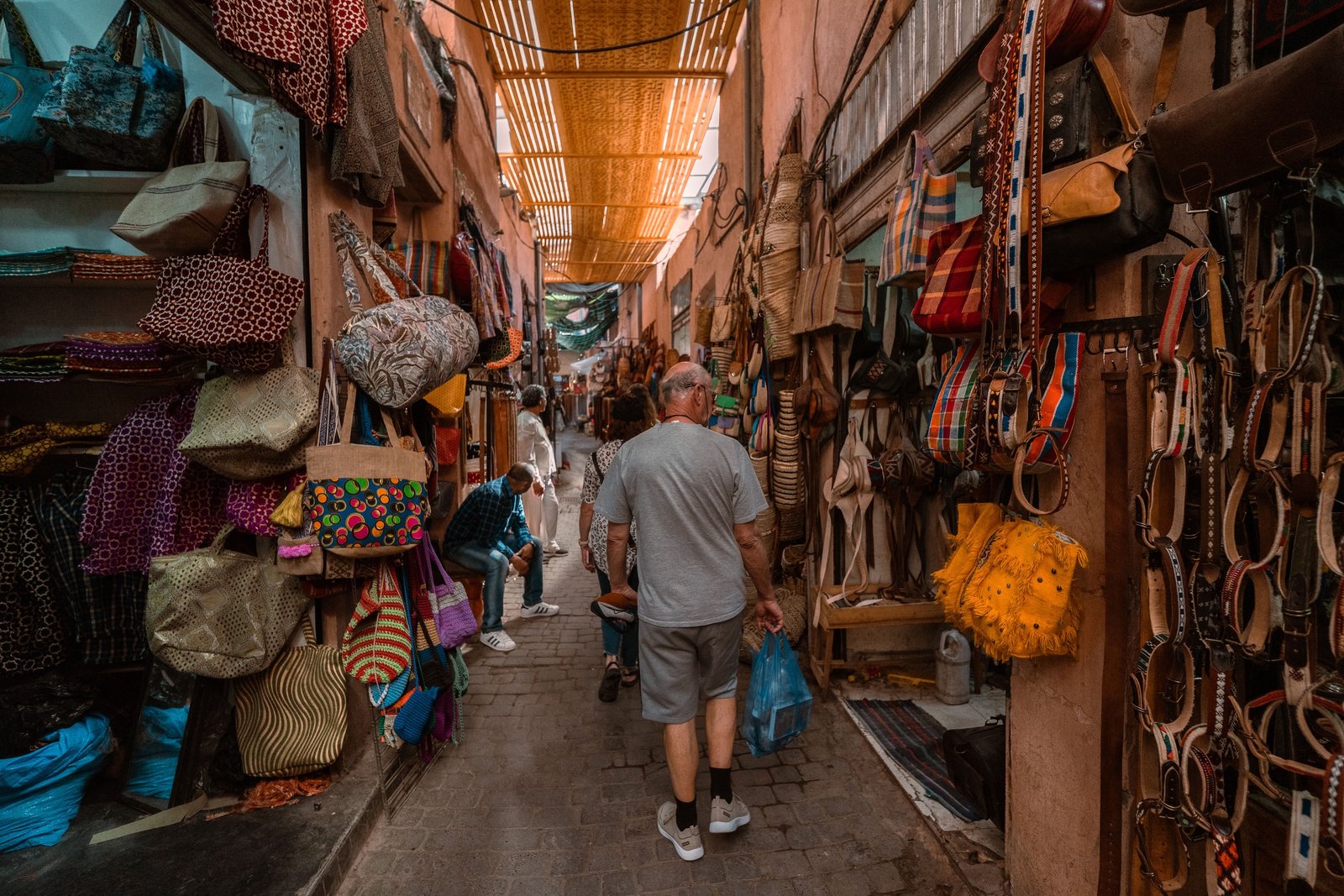
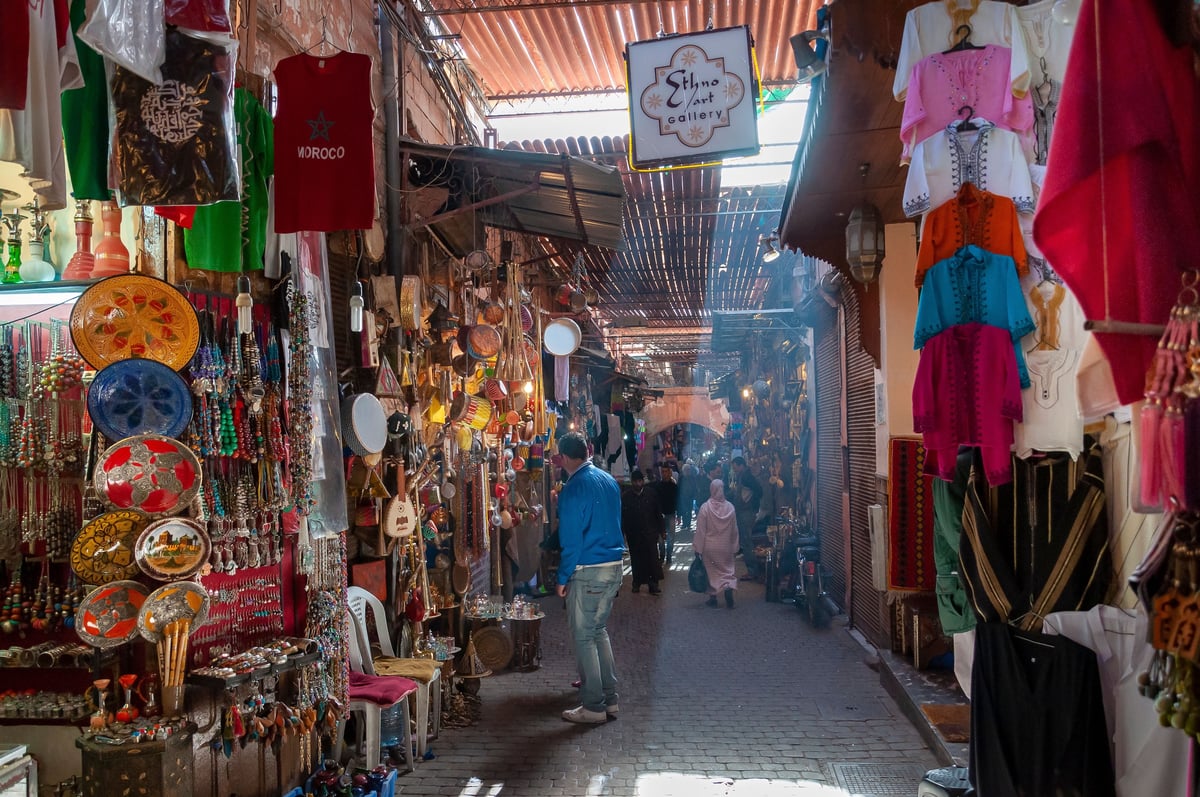
Every one of these approaches depends on the same two conditions: you are unsure where you are, and you would rather not be impolite. Fez el-Bali and the Marrakech souks supply the first condition automatically, since both are genuine mazes where a visitor's uncertainty is visible from twenty paces. American politeness supplies the second, reliably enough that it is worth naming.
The habit that fixes both
Walk as though you know where you are going, even when you do not, and stop somewhere deliberate — a cafe, a shop you have chosen — to check your map rather than standing still in the lane. Uncertainty in motion attracts nothing; uncertainty standing still attracts everything. It is a small change in body language that does most of the work of every tip on this page.
The broken meter
Petit taxis in Morocco are metered by law, and a driver claiming the meter is broken is opening a negotiation rather than reporting a fault. Ask for the meter before you get in, and if the answer is no, close the door and take the next taxi — there is always a next taxi. Agreeing a fare in advance is also fine, provided you agree it before the doors close rather than at the destination.
At the airport rank
Arrival is when you have the least leverage: tired, unfamiliar with the city, carrying luggage, and holding money you withdrew twenty minutes ago. Knowing roughly what a ride into town should be before you land is worth more than any negotiating tactic. Riads will usually arrange a transfer at a fixed rate if you ask ahead, which removes the moment entirely.
The overpriced add-on, sold later
A second family of approaches happens after you have already committed to something: the desert tour that adds a quad-bike ride at the camp, the excursion with an unmentioned lunch stop, the day trip that turns out to include a cooperative visit. The additions are usually real experiences at inflated prices, sold at the moment refusing feels awkward in front of the group.
Settle inclusions in writing first
Ask what is included and what is extra before you book, and keep the answer in a message you can point at. Reputable operators answer this question happily and in detail; the ones who deflect are telling you something useful. This single habit removes most of the friction travellers report on multi-day trips.
What is not a scam
Shopkeepers inviting you in, insistent stall holders, and people offering directions are ordinary commercial life in a market city, not deception. Tipping expectations for small services are real and modest rather than a trick. Treating every interaction as an attempt on your wallet is both wrong and exhausting, and it will cost you most of what makes Morocco worth visiting.
Notice what these have in common: each one turns on a payment you cannot see, made by someone other than you. That structure appears in far more of a Moroccan trip than the medina lane — it is worked out in full in the complete Morocco trip guide, alongside the decisions it quietly shapes.
For the broader safety picture, see our honest safety guide; for the souk itself, the haggling guide covers what happens once you are inside a shop.
Morocco scams: FAQ
Are these scams dangerous?
Rarely. They are commercial pressure rather than crime — the realistic cost is money and patience, not safety. Violent crime against tourists is uncommon.
How do I refuse a faux guide politely?
A friendly "no thank you" while continuing to walk, repeated once without slowing down, ends nearly every approach.
Should I use a guide at all?
Official guides are genuinely worth it, especially for a first day in Fez. The distinction is licensing and how they are paid, not whether guiding is useful.
What if the taxi meter is "broken"?
Take the next taxi, or agree the fare before the doors close. Petit taxis are metered by law and there is always another one.
Is it rude to keep saying no?
No. Persistent, friendly refusal is normal and expected here. Nobody is offended by it.