Exchanging Money at Moroccan Airports: A Reality Check
You land with no dirham because you can't buy it in advance. The airport ATM, the exchange counter, and which one to actually use in your first ten minutes.
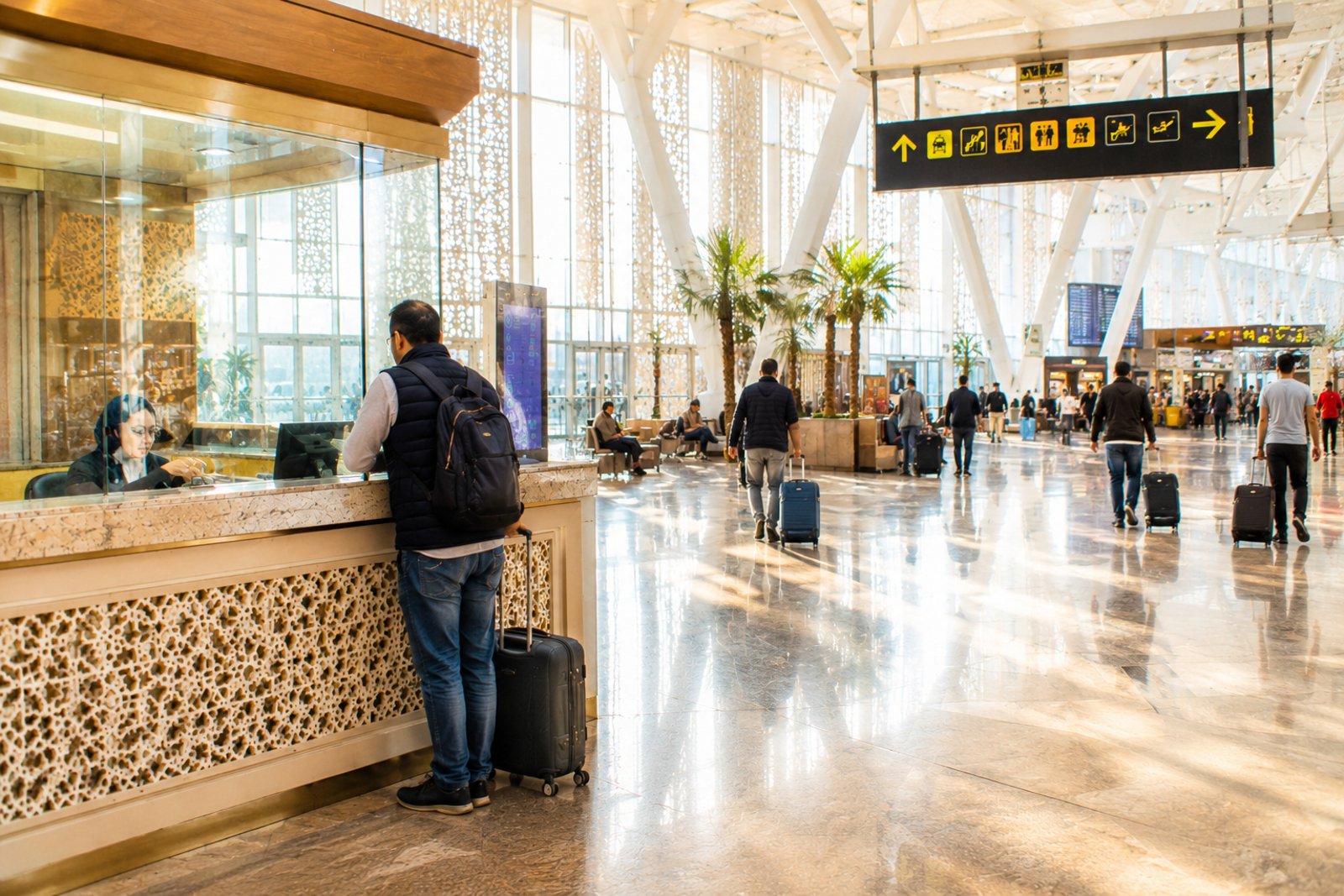
Every American lands in Morocco with no local money, because the dirham is a closed currency you cannot buy before you fly — there is no way around getting your first cash on arrival. That makes the airport the site of your first financial decision, between the ATM and the exchange counter sitting a few metres apart in the arrivals hall. They are not equal, and the right choice in your first ten minutes saves you money and sets the tone for the trip.
Why you have no dirham yet
The dirham cannot legally leave Morocco freely and is not sold by US banks, so unlike euros or pounds you cannot arrive with a starter amount in your wallet. This closed-currency rule is the reason the airport cash decision exists at all, and it is worth understanding rather than being surprised by at the machine. Everyone around you in the arrivals hall is solving the same problem for the first time.
Use the ATM, not the counter
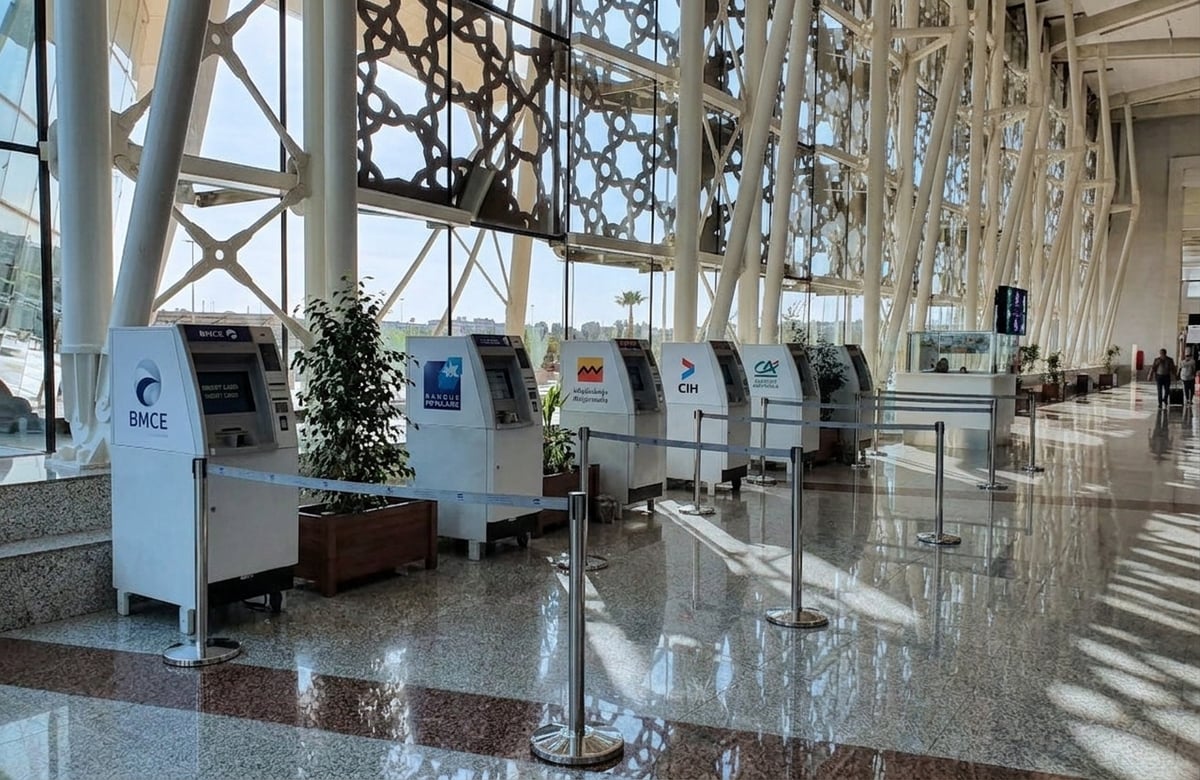
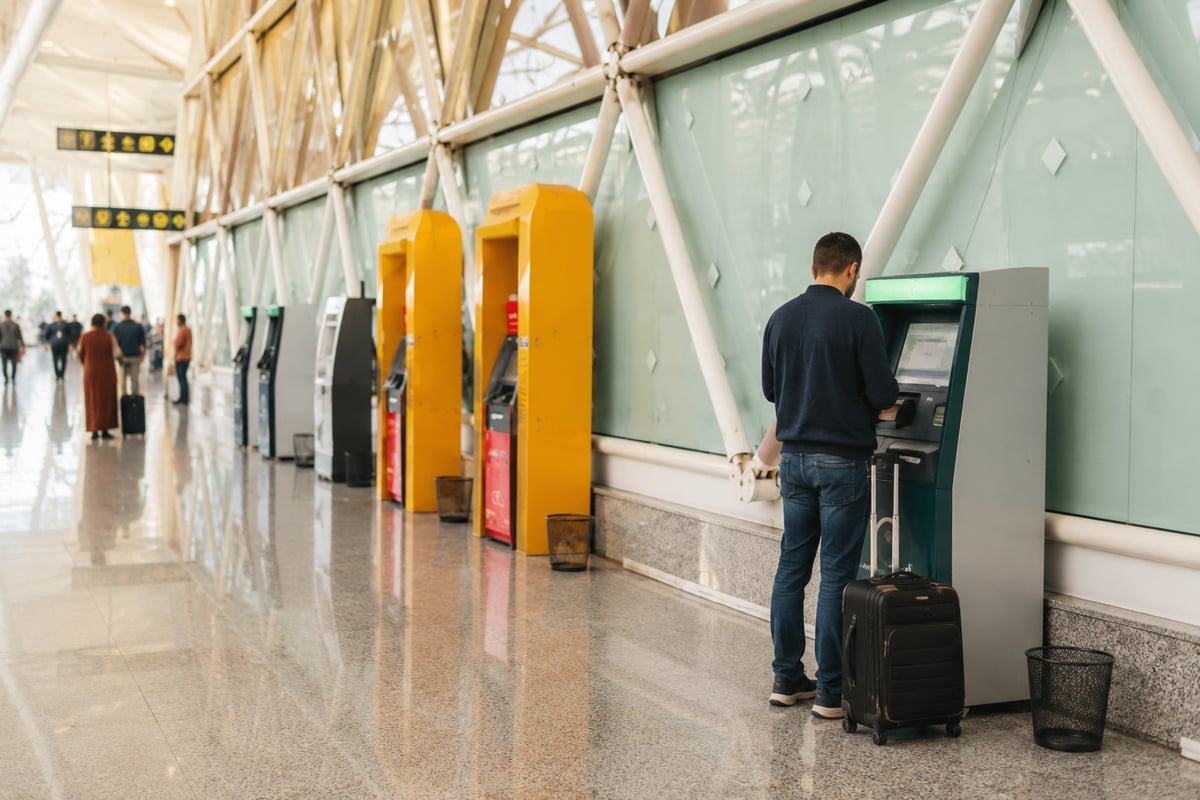
For almost every traveller, the bank ATM in the arrivals hall gives the better rate, and there are machines from the major Moroccan banks at both Casablanca and Marrakech airports. The exchange counter beside it is convenient, staffed and visible, and priced for people who feel they have no alternative at the end of a long flight. If your card works, walk past the counter to the machine.
Decline the dollar conversion
At the ATM, the machine may ask whether you want to be charged in dirham or in dollars — always choose dirham. The dollar option, dynamic currency conversion, lets the machine set a worse exchange rate than your own bank would, quietly costing you a few percent. This is the same prompt you will meet at card terminals all trip, and the answer never changes: pay in the local currency.
When the counter earns its keep
The exchange counter is not useless — it is the fallback if your card is blocked, damaged or simply not working, which happens often enough to plan for. In that case, change a small amount there to get into town and sort the rest properly the next day. This is exactly why carrying a couple of hundred dollars in clean, undamaged notes as backup is sensible: it turns a failed card from a crisis into a minor detour.
How much to take out
Withdraw enough for the first day or two rather than a token amount, since most US cards charge a flat fee per withdrawal and fewer, larger withdrawals cost less overall. Do not, however, take out a huge sum on arrival — you are tired, unfamiliar with the city, and can top up easily at bank machines in town. A sensible first withdrawal covers the airport transfer, the first meals and a cushion, and no more.
Which airport you land at
The two main arrival airports, Casablanca and Marrakech, both have bank ATMs in their arrivals halls, so the advice is the same wherever you land: use the machine, decline the dollar conversion, and take out enough for the first day or two. Casablanca, being the larger hub, has more machines and the train station beneath it; Marrakech drops you closer to where most first trips actually begin. Either way, the cash step is identical.
If the first machine fails
ATMs occasionally reject a card, run empty, or are out of service, so if the first machine does not work, try another from a different bank before assuming your card is the problem — the arrivals halls have several. Only after two machines fail is it worth changing a little at the counter as a stopgap. This small persistence saves the exchange-counter markup that a hasty traveller pays after one unlucky machine.
Before you leave the machine
Set a travel notice with your bank before you fly so a first foreign withdrawal is not flagged as fraud, and carry a second card from a different bank in a separate pocket in case the first fails. These two habits, decided at home, are what make the airport cash step a non-event. With dirham in hand and your phone connected, the rest of the arrival is simple logistics.
Getting dirham at the airport is the first link in the closed-currency chain that runs the whole trip: what you withdraw shapes what you can pay for, right through to spending it down before you fly home. How that chain connects is worked out in the complete Morocco trip guide.