Where to Change Money in Morocco: Airport, Bank, or ATM?
You can't buy dirham before you fly, so where you get it on arrival matters. ATMs, bank branches, licensed bureaux and the airport counter, compared honestly.
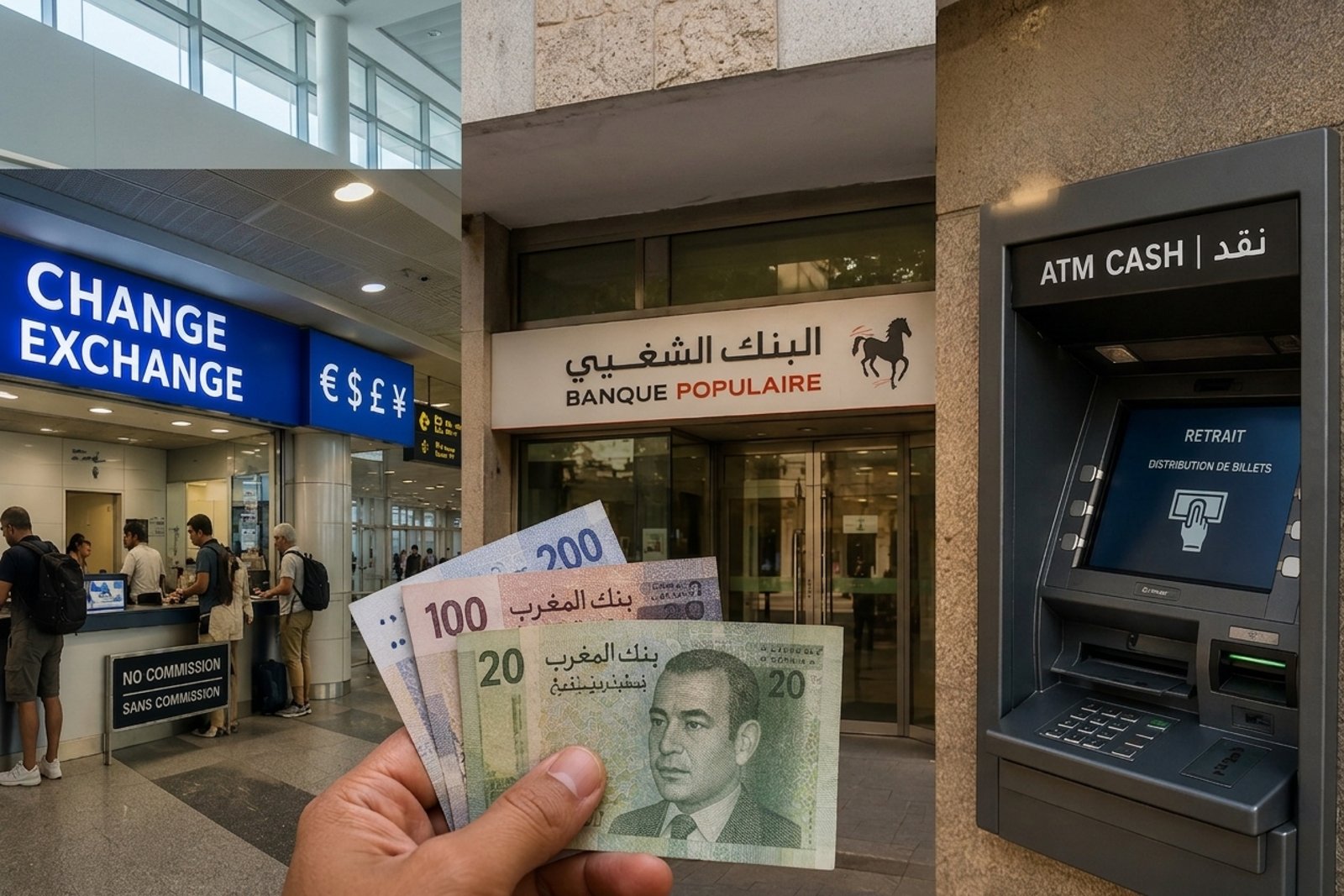
Because the dirham is a closed currency, every American arrives in Morocco with no local money at all — there is no way to get it in advance from your bank at home. That makes your first transaction in the country a small but real decision: airport ATM, bank branch, licensed exchange bureau, or the counter in arrivals. They are not equivalent, and the gap between the best and worst option compounds over a two-week trip.
The short answer: use an ATM
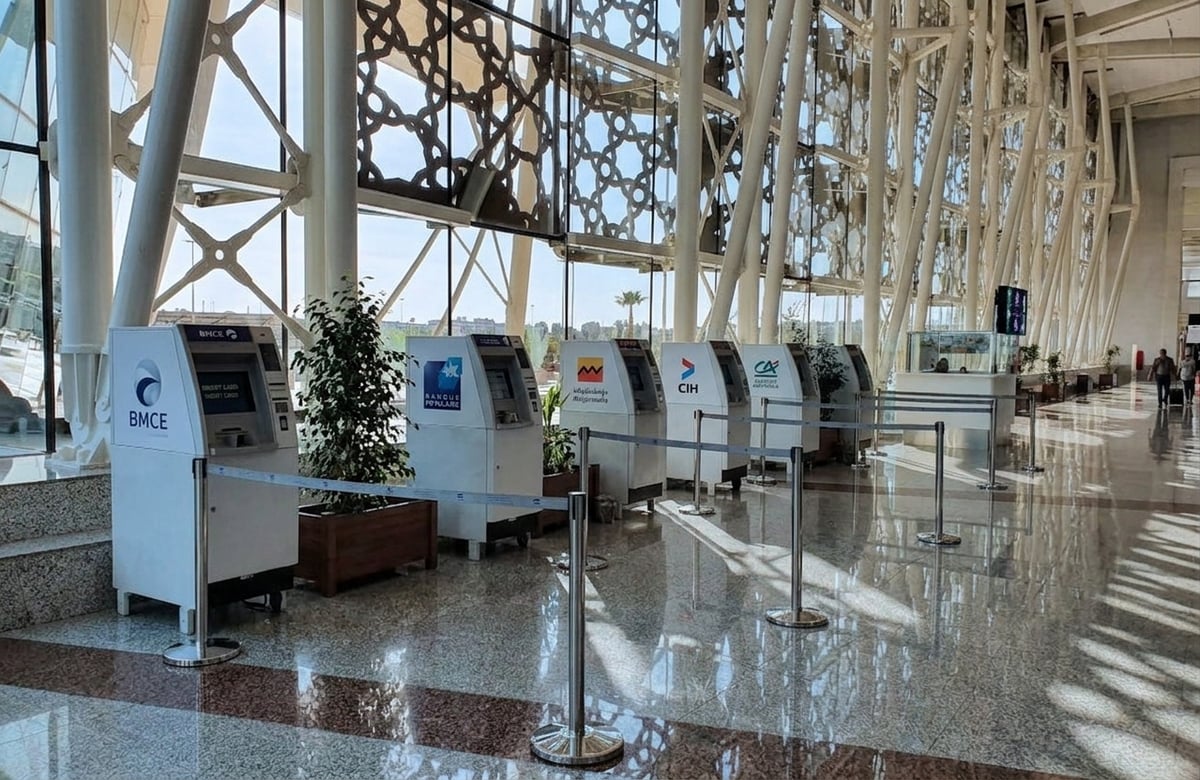
For almost every visitor, withdrawing dirham from a bank ATM gives the best rate available, and there are machines in the arrivals halls at both Casablanca and Marrakech airports. The major banks — Attijariwafa, Bank of Africa, Banque Populaire and CIH — all operate them, and the rate you get is the interbank rate your card network applies rather than a retail counter's spread. Take out enough for the first few days and move on.
Why the airport counter loses
The exchange counter in arrivals is the most visible option and the least competitive. It is convenient, staffed, and priced for people who feel they have no alternative at 2am. If your card works, walk past it. If your card does not work, change a small amount there to get into town and sort the rest properly the next morning.
Bank branches and licensed bureaux
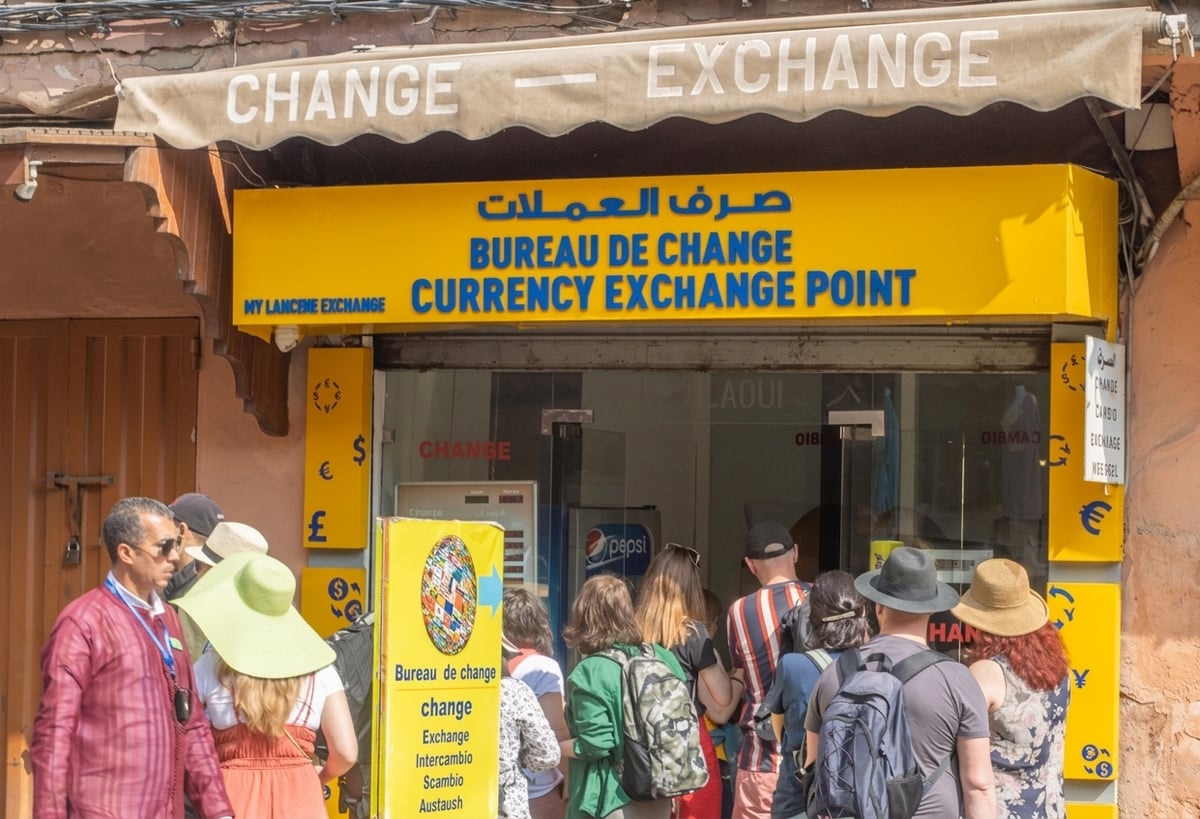
Licensed exchange bureaux in Marrakech and Fez city centres will change dollars or euros into dirham at rates that are usually fair and posted openly, and they are genuinely useful as a backup if your card is blocked or lost. Look for the official licence displayed at the window. Bank branches also exchange cash, with more paperwork and shorter hours, and they close early in the afternoon.
What to carry as a backup
A couple of hundred dollars in clean, untorn notes is the sensible insurance policy. Damaged or heavily marked bills are frequently refused, which surprises Americans used to spending whatever comes out of the wallet. Keep the backup separate from your card, because the entire point is that it survives whatever happened to the card.
Never change money on the street
Informal street exchange exists around Jemaa el-Fnaa and similar squares in the bigger cities and is both illegal and consistently a bad deal for the visitor. The rate offered is quoted to sound attractive, the count happens quickly, and there is no recourse afterwards. There is no scenario on a first trip where the street is the right answer, because a licensed bureau is usually within a few minutes' walk.
How much to change at once
Withdraw in larger, less frequent amounts rather than small daily top-ups, since most cards charge a flat fee per withdrawal on top of any percentage. Three or four withdrawals across a two-week trip is a reasonable rhythm for most travellers. Balance that against carrying more cash than you are comfortable with, and use your accommodation's safe for the reserve.
Tell your bank before you go
A card that stops working in the Marrakech arrivals hall turns a minor task into a genuine problem, and Morocco is a common trigger for automated fraud blocks on US cards. Set a travel notice, take a second card from a different bank, and keep it somewhere separate from the first. This is the single cheapest precaution on the list.
Reading a posted rate
Exchange windows post two numbers, a buy rate and a sell rate, and the gap between them is what the business earns. A narrow gap is a fair offer; a wide one is not, and it costs you the same whether or not the sign also says "no fees". Compare two windows on the same street before you hand anything over, because they sit within a few doors of each other in most city centres and they do not price identically.
Count before you walk away
Count the notes at the window, in front of the person who handed them to you, every time. This is normal behaviour in Morocco rather than an accusation, and nobody will be offended. Once you have walked off, a shortfall becomes your word against theirs, and the amounts involved are usually just small enough that people decide it is not worth going back for.
Getting rid of dirham at the end
Morocco limits what leaves the country as well as what enters it: you may take out no more than 2,000 MAD, and exceeding that is illegal rather than merely declarable. Dirham is also hard to change back once you have left the country. Plan the last few days so you spend down what you are carrying rather than converting it twice.
Where you get dirham is the first link in a longer chain: what you withdraw shapes what you can pay for, and what you can pay for shapes how the day runs. The the complete Morocco trip guide follows that chain from the arrival hall through to the last afternoon, alongside the base and transport decisions it drives.
For the mechanics of the currency itself, see our dirham guide; for what things actually cost once you have cash in hand, the cost breakdown puts numbers to a day.
Changing money in Morocco: FAQ
Can I buy dirham before I leave the US?
No. The dirham is a closed currency, so it is not sold by US banks or exchange services. You get it after you land.
Are there ATMs at the airport?
Yes, in the arrivals halls at both Casablanca and Marrakech, operated by the major Moroccan banks. They are the usual first stop.
Should I bring US dollars as backup?
A couple of hundred dollars in clean, undamaged notes is sensible insurance if a card fails. Torn or marked bills are often refused.
Is the airport exchange counter a rip-off?
Not a scam, just expensive. Its rate is worse than an ATM's, so use it only for a small amount if your card is not working.
Can I take dirham home as a souvenir?
Only up to the legal export cap, and it is difficult to change back abroad, so spend it down before you fly.