Americans plan Morocco budgets in dollars and then discover the country runs on physical cash, in a currency they could not buy before you arrive at a Moroccan ATM. The question that actually matters day to day is not what the trip costs but how much dirham should be in your pocket on any given morning — enough that you are never stuck, not so much that losing a wallet ruins the week. Here is how to think about it.
What still has to be cash
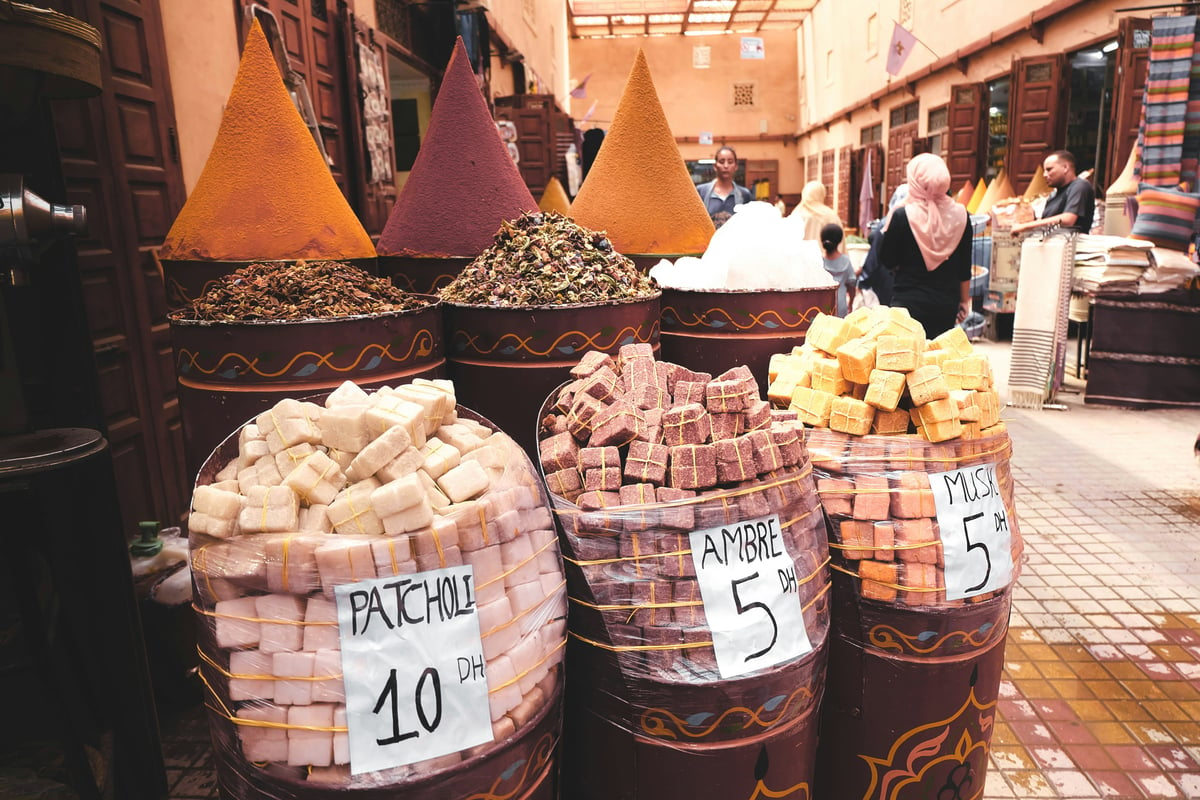
Morocco is a cash-heavy economy, and exactly four categories are effectively cash-only for a visitor: souk stalls, taxis, small cafes, and anything in rural or desert areas. Hotels, riads, upscale restaurants and modern city shops take cards reliably. That split is stable enough to plan around, and it means your daily cash need is driven by how you eat and move rather than by where you sleep.
The daily rhythm for most first-timers
A typical city day involves a few taxi rides, one or two casual meals, entry tickets, water, and something small from a stall. That is a modest amount in dirham terms, and it is the reason travellers who withdraw once and carry sensibly rarely think about money again. Where people get caught is the day that turns out to be different — a long drive, a rural stop, a market town.
Withdraw in blocks, carry in slices
The efficient pattern is to take out a larger amount every few days and carry only part of it. Most US cards charge a flat fee per withdrawal, so four trips to the machine across two weeks costs meaningfully less than fourteen. Leave the reserve in your riad's safe and move a day or two of spending money into your wallet each morning.
Split it, always
Keep your cash in two places on your person and a third in the room. This is not about theft rates in Morocco, which are ordinary for a busy tourist destination — it is that a single lost bag should never be able to end your access to money. The same logic applies to cards: two, from different banks, never in the same pocket.
Small notes are the real currency
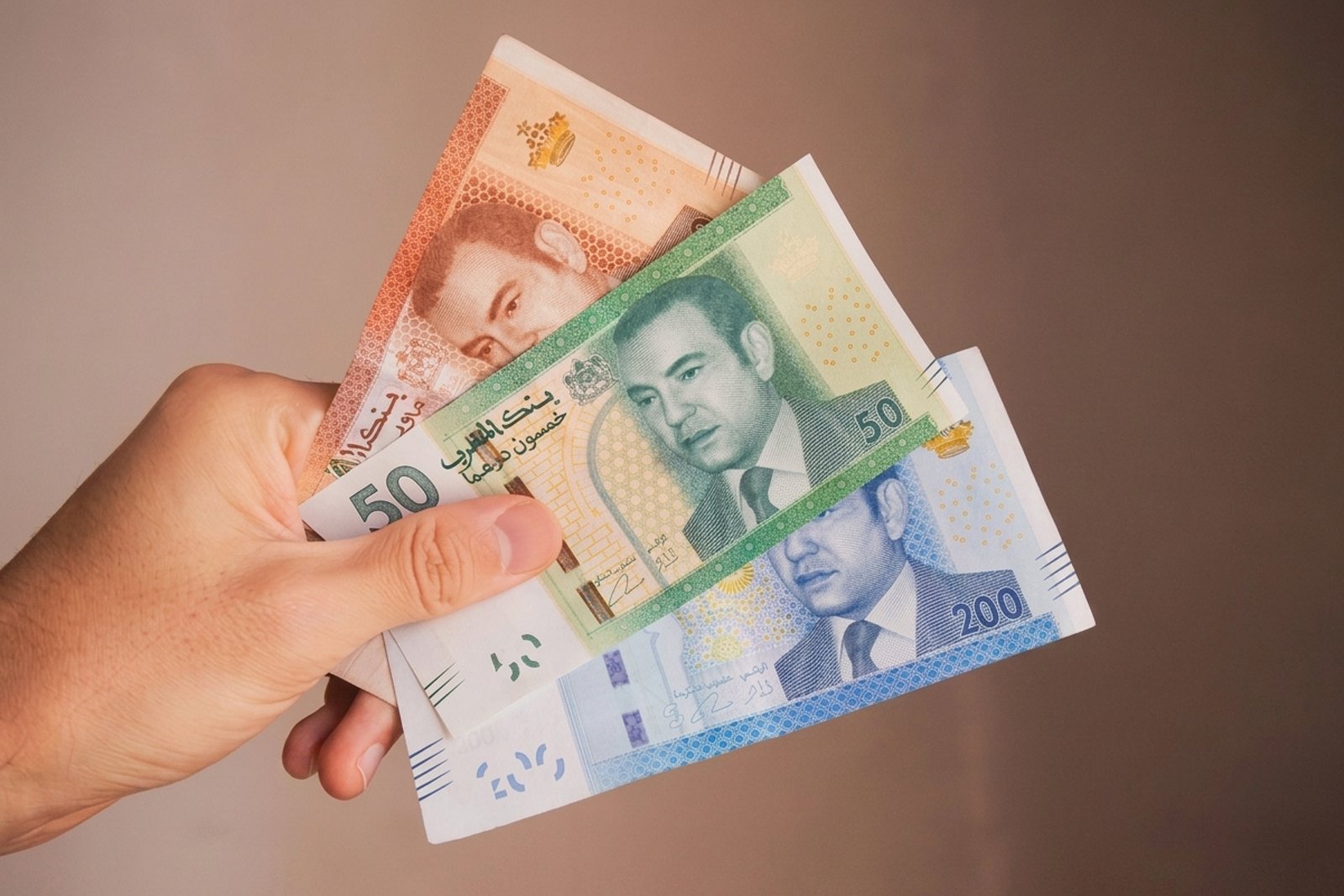
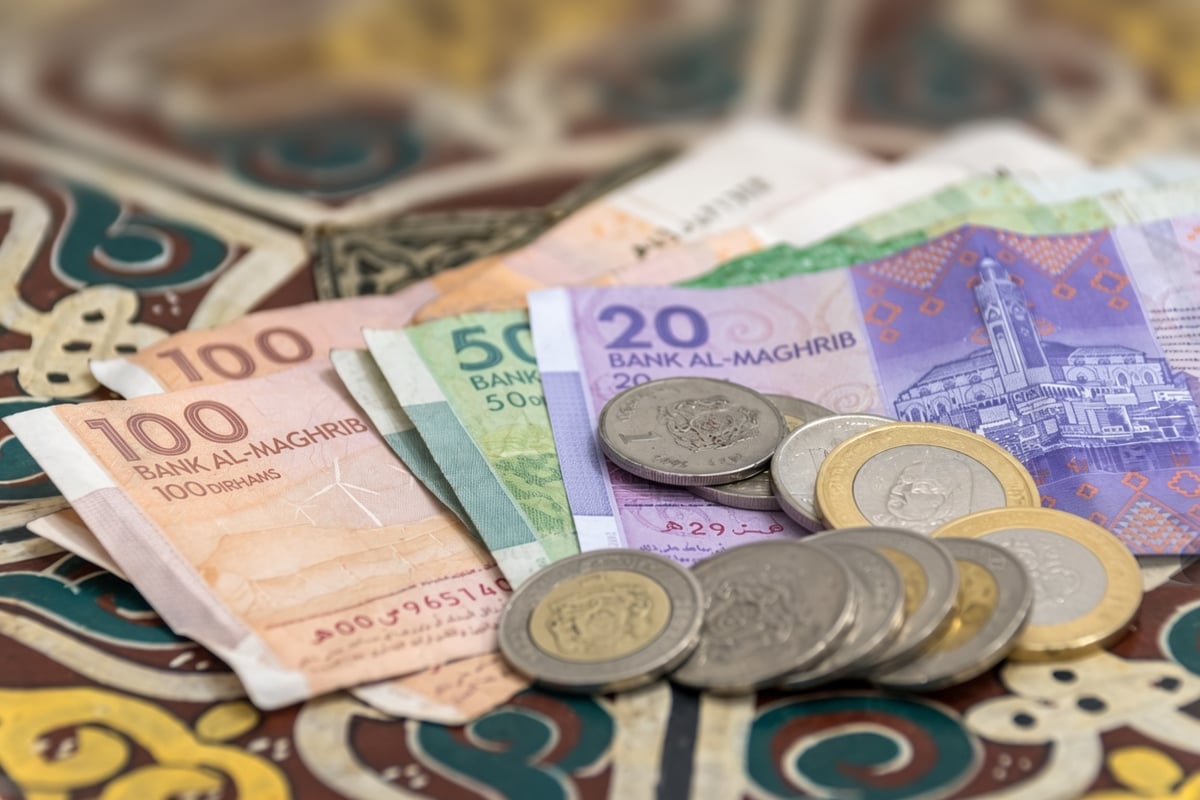
Change is genuinely scarce in Morocco, and machines dispense large notes that many taxi drivers, stall holders and cafes cannot break. Nobody is trying anything on you when they cannot make change for a big bill — they simply do not have it, and the transaction stalls. Break large notes deliberately, in supermarkets, at your riad, or when paying restaurant bills.
Keep a working float
Aim to always hold a handful of small notes and coins before you need them. They cover taxis, water, tips for porters and guides — the site's guide-and-porter range sits at 5 to 20 dirham — parking attendants, and the hammam. Running out of small change is the most common daily friction Americans report, and it is entirely preventable.
The desert and rural legs need more
Machines are widespread in cities and towns but sparse in the deep Sahara and thin in the remote Atlas, so the last town with reliable banking is where you top up. Desert camps, roadside stops and village cafes all expect cash, and the trip may run two or three days before you see a bank again. Withdraw for the whole leg before you leave.
What a card still can't do here
Card acceptance in Morocco is wider than it was and still narrower than Americans expect, and the gap shows up in specific places rather than randomly. Parking attendants, medina porters, public toilets, roadside stops, small-town bus stations and most museums outside the biggest cities all want notes and coins. None of these is expensive, which is exactly why running out feels absurd when it happens.
Sunday, holidays, and the arrival evening
Banks close early and stay shut on Sundays and public holidays, and while machines keep working, a machine that is empty or out of service on a Sunday afternoon in a small town has no fallback nearby. The same applies to your first evening: arriving late with nothing in your pocket puts you at the mercy of whichever exchange point is still open. Carry a working amount into both situations.
Ramadan and adjusted hours
During Ramadan, banks, shops and restaurants run on shortened and shifted schedules, and the hour around sunset empties the streets almost completely. Nothing about this is difficult, but it rewards travellers who are already carrying what they need for the evening rather than planning to sort it out at six o'clock.
Plan the last two days downward
Because you cannot take much dirham home and it is hard to change back abroad, the goal at the end is to land near zero. Stop withdrawing about two days out and let card-friendly places — your riad, restaurants, the airport — absorb the remaining spending. Whatever is left over goes on gifts, a final meal, or straight into the tip you were going to leave anyway.
How much you carry is downstream of one structural fact and upstream of several daily ones: it decides which stalls you can use, which rides you can take, and how far from a bank you can comfortably travel. Those connections are worked through together in the complete Morocco trip guide.
For the currency rules themselves, see the dirham guide; for a full day-by-day budget in dollars, the cost breakdown is the companion piece.
Carrying cash in Morocco: FAQ
Can I get by on cards alone?
No. Hotels and upscale restaurants take cards, but taxis, souk stalls, small cafes and rural stops are cash-only.
How often should I use an ATM?
Every few days rather than daily. Most US cards charge a flat fee per withdrawal, so fewer, larger withdrawals cost less.
Why can nobody make change?
Small notes are genuinely scarce and machines dispense large ones. Break big bills at supermarkets, restaurants or your riad and keep a float of small notes.
Is it safe to carry cash in the medina?
With normal precautions, yes. Split it between two places on you and leave a reserve in the room safe so one lost bag is never the whole trip.
How much do I need for a desert trip?
Enough for the entire leg. Machines are sparse beyond the last sizeable town, and camps and roadside stops expect cash.