Morocco for First-Timers: Everything You Need to Know Before You Go
A first trip to Morocco can feel like a lot to plan. Here's the honest, American-friendly rundown — safety, money, getting around, and what to actually expect.
Morocco is one of those places that feels impossibly far from home and then, three hours after landing, feels like somewhere you've always wanted to be. For a first-time American traveler, it's an easy introduction to North Africa and the Arab world: it's set up for tourism, the distances are manageable, and you can pack sweeping desert, medieval cities, and Atlantic beaches into a single trip. This guide covers the things first-timers actually worry about, so you can plan with confidence rather than guesswork.
Do Americans need a visa for Morocco?
No. U.S. citizens can enter Morocco visa-free for tourism and stay up to 90 days. You'll get a stamp on arrival; there's no fee and no online application to fill out beforehand. That said, entry rules are the one thing worth double-checking close to your trip, since governments change them without much notice. Make sure your passport is valid for at least six months beyond your entry date and has a blank page for the stamp. We cover the details in our Morocco visa guide for Americans.
Is Morocco safe?
For the vast majority of visitors, yes. Violent crime against tourists is rare, and Morocco is generally considered one of the safer countries in the region — millions of travelers, including solo women, visit every year without incident. What you'll actually deal with is petty stuff: pickpocketing in crowds, aggressive touts, and medina scams like a stranger insisting a street is "closed" so they can lead you somewhere. None of it is dangerous, but it's worth knowing about so it doesn't rattle you. Our honest safety guide walks through it, and the common scams are easy to sidestep once you know the playbook.
Money: the dirham is a closed currency
The Moroccan dirham is a closed currency, so you cannot buy it before you fly — no US bank sells it. You withdraw dirham from an ATM once you land (there are machines in the Casablanca and Marrakech arrival halls) or change dollars at a licensed bureau. Morocco runs heavily on cash: souks, taxis and small cafes are cash-only, while hotels and nicer restaurants take cards.
When should you visit?
Spring (March to May) and fall (September to November) are the sweet spots: warm days, cool nights, and comfortable conditions for both the cities and the desert. Summer gets brutally hot inland — Marrakech, Fez, and the Sahara can push past 100°F — though the coast at Essaouira stays mild. Winter is cool and pleasant in the cities, cold at night in the desert, and snowy in the Atlas Mountains. If your dates overlap Ramadan, the rhythm of daily life changes; it's a fascinating time to visit but worth understanding first. See our month-by-month guide.
Where to go on a first trip
A first trip usually covers four places in ten days or fewer: Marrakech as the entry point, Fez for the medieval medina, Chefchaouen in the Rif mountains, and one night in the Sahara. Each is completely different from the last, and the distances between them shape the itinerary more than the sights do. The classic loop, in order:
Marrakech
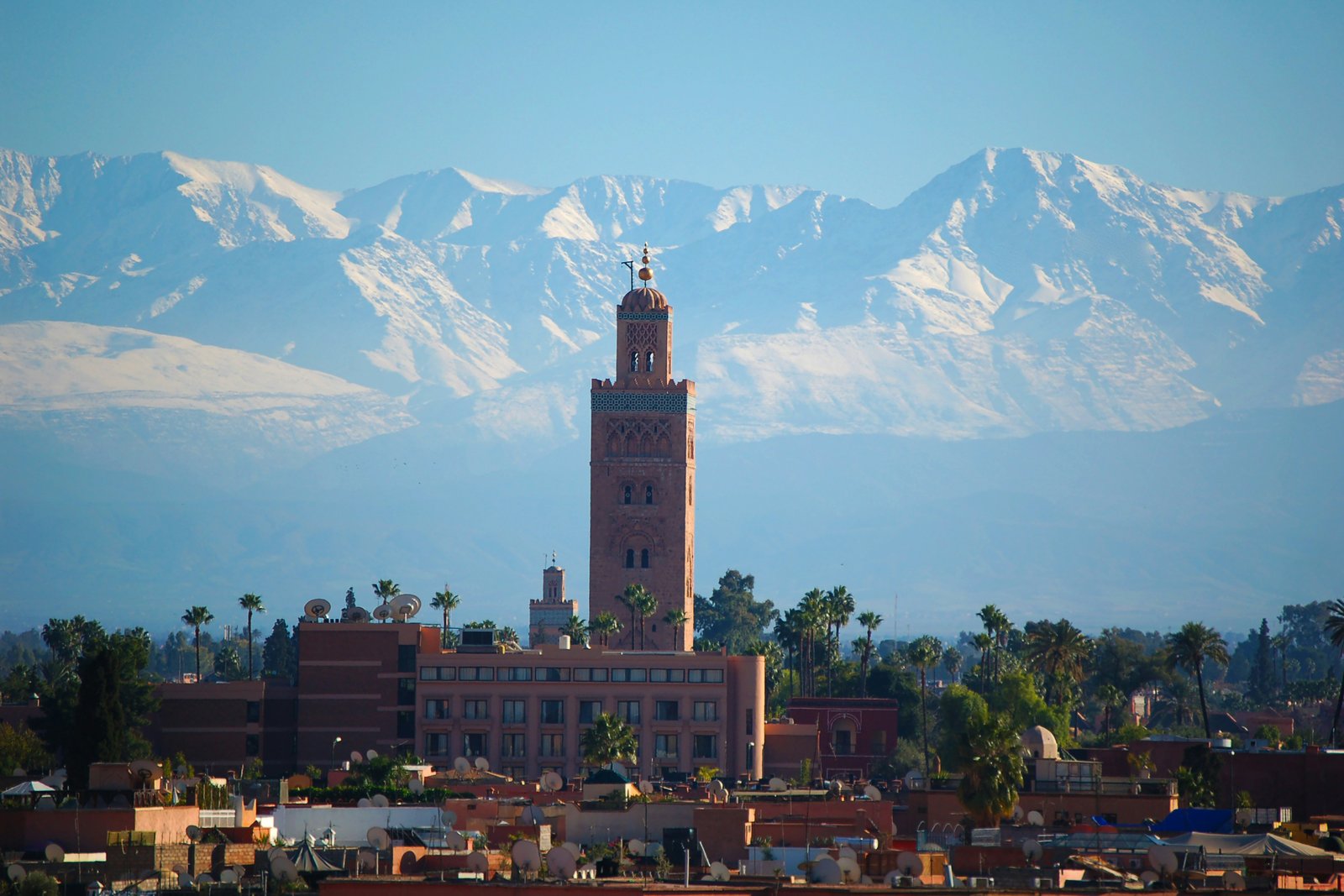
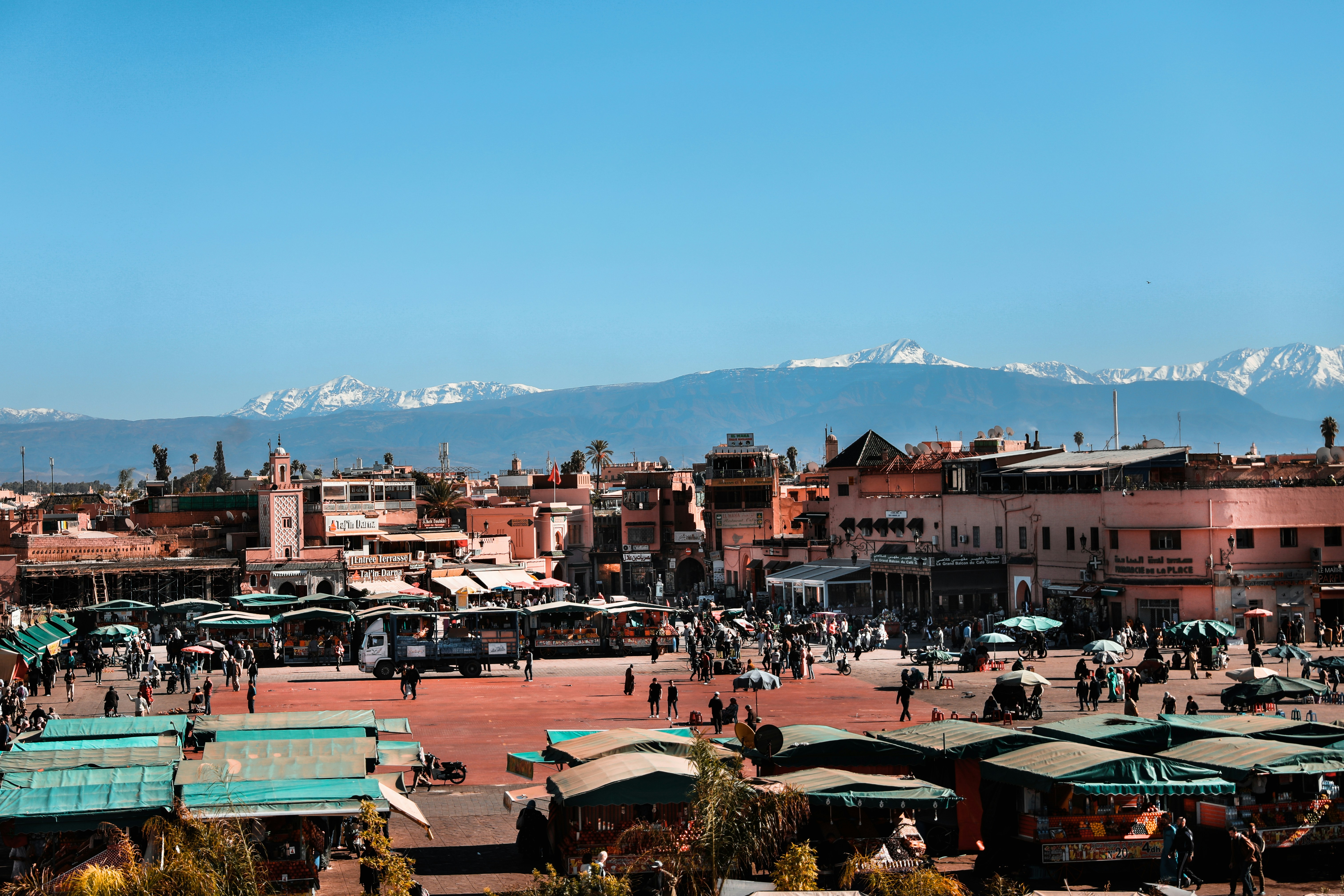
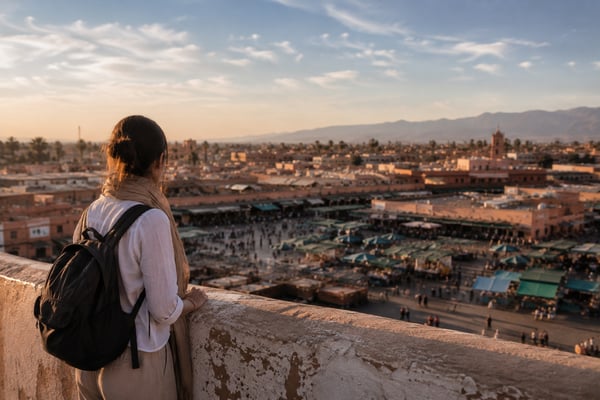
The sensory heart of Morocco and the usual starting point, with the famous Jemaa el-Fnaa square, endless souks, and gorgeous gardens. See our Marrakech guide.
Fez
Home to the world's largest car-free medieval city — a genuine maze where a local guide for the first day pays for itself.
Chefchaouen
The blue-washed mountain town, small, relaxed, and endlessly photogenic.
The Sahara
A night in a desert camp among the dunes of Erg Chebbi is the bucket-list experience — camel ride at sunset, dinner under the stars, sunrise over the sand.
Essaouira and the Atlas Mountains
A windswept Atlantic beach town and the Berber villages of the High Atlas round out the trip if you have time.
Getting around
Morocco is easier to navigate than you'd expect. Comfortable ONCF trains connect Casablanca, Rabat, Fez, and Marrakech, with a high-speed line up north. For places off the rail network — Chefchaouen, Essaouira, and the desert gateways — CTM and Supratours coaches are the reliable options. In cities, small metered "petit taxis" handle short hops (insist on the meter or agree the fare first). The Sahara is almost always done as a multi-day tour with a driver. More in our transport guide.
Language: will you get by?
Yes. Arabic and Tamazight (Berber) are the official languages, and French is widely spoken in business, government, and tourism — a legacy you'll notice on signs and menus. In the places tourists spend time, English is common: hotel and riad staff, guides, and popular restaurants will usually handle English fine. Away from the tourist track, a few words of French go further than English, and any attempt at Arabic — a simple "salam" (hello) or "shukran" (thank you) — is warmly received. You don't need to speak the language to travel here comfortably, but a handful of phrases makes every interaction friendlier.
What a first trip actually feels like
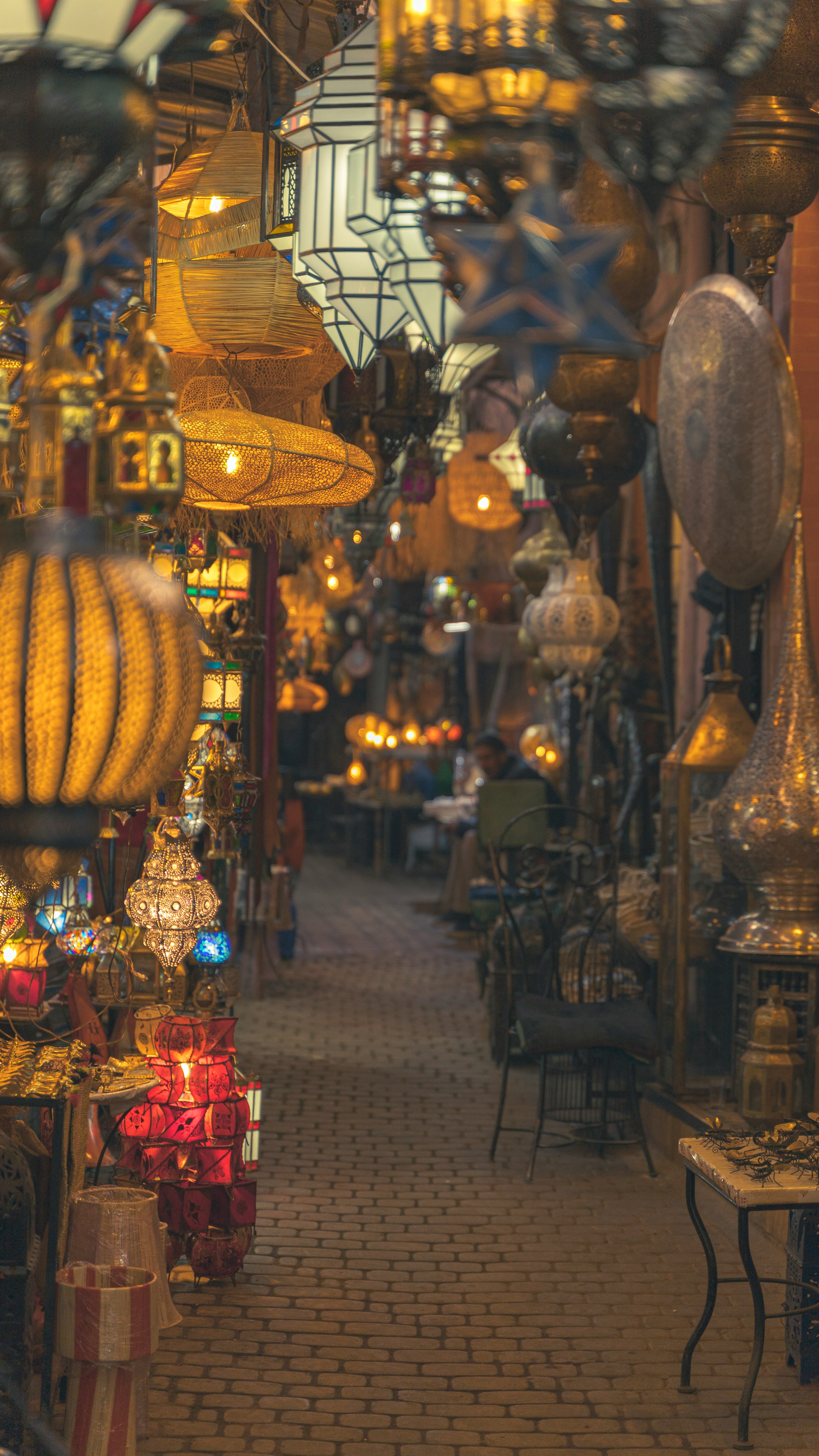
Set your expectations for contrast, because that's the Morocco experience. One hour you're haggling for a lantern in a chaotic souk with a dozen smells competing for your attention; the next you're sipping tea in silent riad courtyard. The cities are intense and can be tiring — the constant sensory input and the occasional tout wear on you — so build in downtime and don't try to cram every day full. The desert and mountains, by contrast, are serene. A well-paced first trip alternates the two, and most people leave already planning a return.
Practical first-timer tips
A few things that smooth out a first trip: dress modestly, especially outside tourist zones — covering shoulders and knees is respectful and also helps with sun and heat. Get an eSIM so you land connected, which is handy when you need maps or a ride the moment you arrive and don't have dirham yet. Accept the mint tea when it's offered; it's hospitality, not a sales trap. And decide early whether you want a guided tour or independent travel — both work well here, and it shapes how you book everything else. The connections between these decisions — base, route, desert, money — are worked out together in the complete Morocco trip guide.
Morocco first-timer FAQ
How many days do you need for a first trip to Morocco?
Seven days covers a solid taste (two cities plus a desert night); ten days is the comfortable classic loop; two weeks lets you add the coast and mountains without rushing.
Can you drink alcohol in Morocco?
Yes — it's legal for tourists and served in many hotels, licensed restaurants, and bars, though it's not consumed openly in public. It's simply less visible than at home.
Do people speak English in Morocco?
Arabic and Tamazight are official, and French is widely used. English is common in tourist areas — hotels, guides, and popular restaurants — though a few French or Arabic phrases go a long way elsewhere.
Is Morocco good for a first international trip?
It's a great step beyond Europe: exotic and different, but well set up for tourists, with short distances and plenty of infrastructure. A little preparation goes a long way.